HTC One M9 Review: Premium Build, Familiar Problems

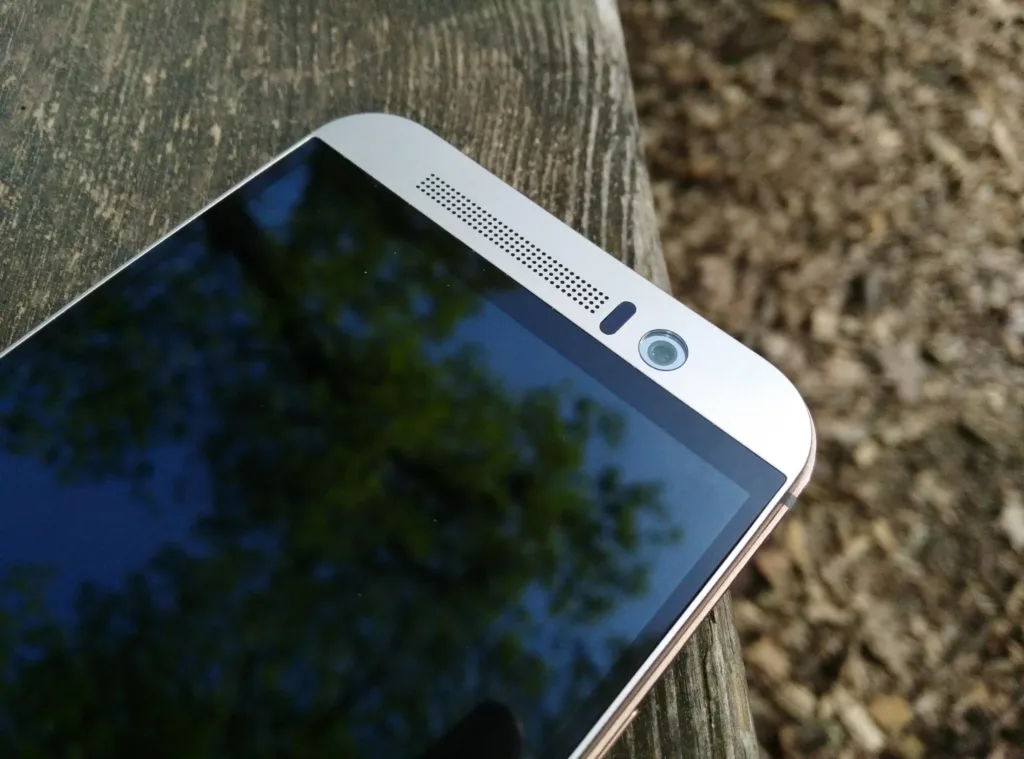
HTC’s new flagship, the One M9, is slowly making its way onto the market, so we spent some time with it for a full review. But much like the LG G Flex 2 we tested earlier, this phone raises a few obvious questions. We’ll get into the strengths and weaknesses, and take a closer look at the “new” 20.7MP camera HTC has been talking up.
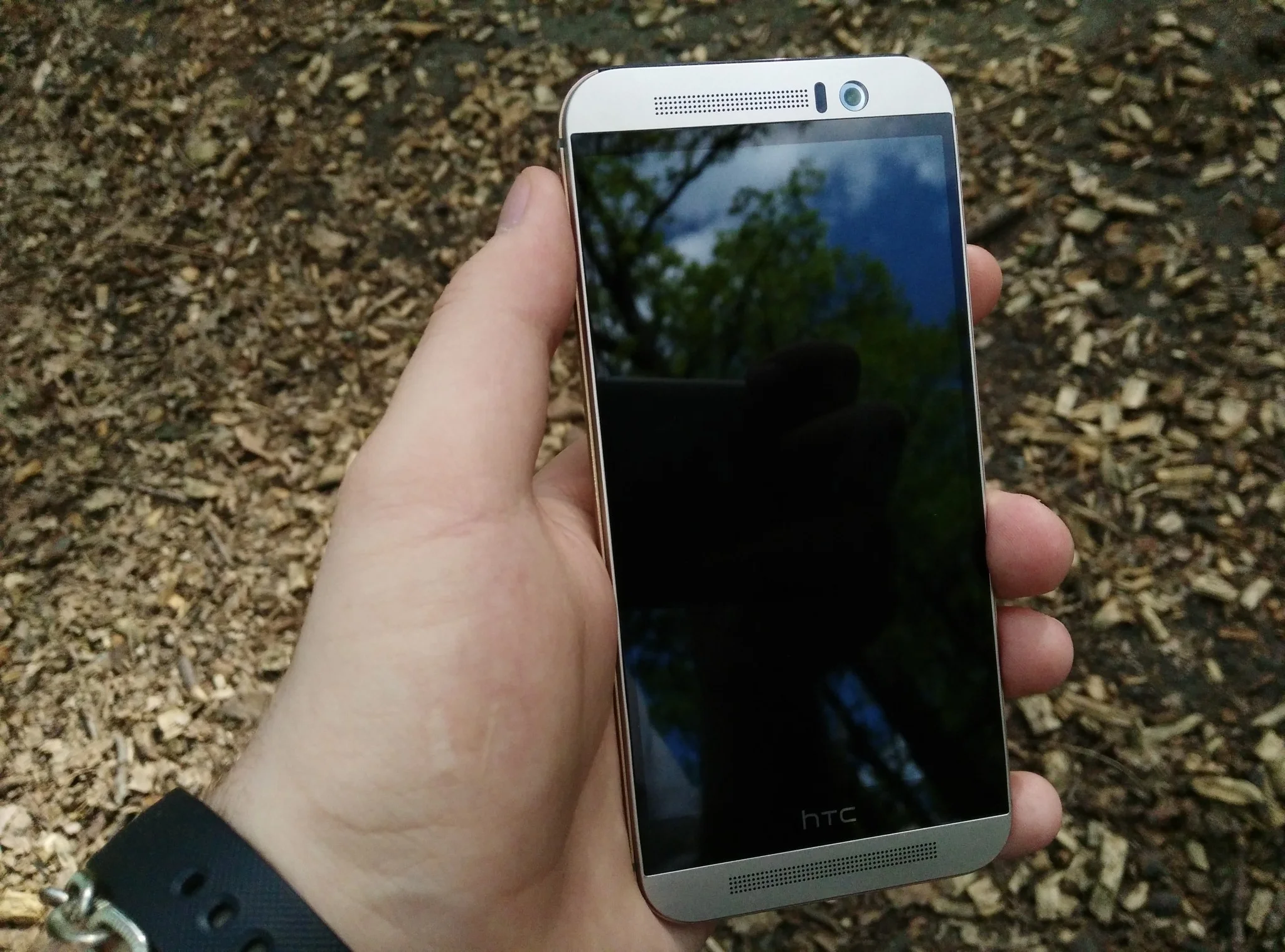
Design
The previous model, the One (M8), came with a dual-camera setup on the back. Plenty of people clearly weren’t sold on that idea and wanted HTC to go back to a single rear camera, ideally a better one. That’s exactly what happened here. The HTC One M9 has a single 20.7MP rear camera.
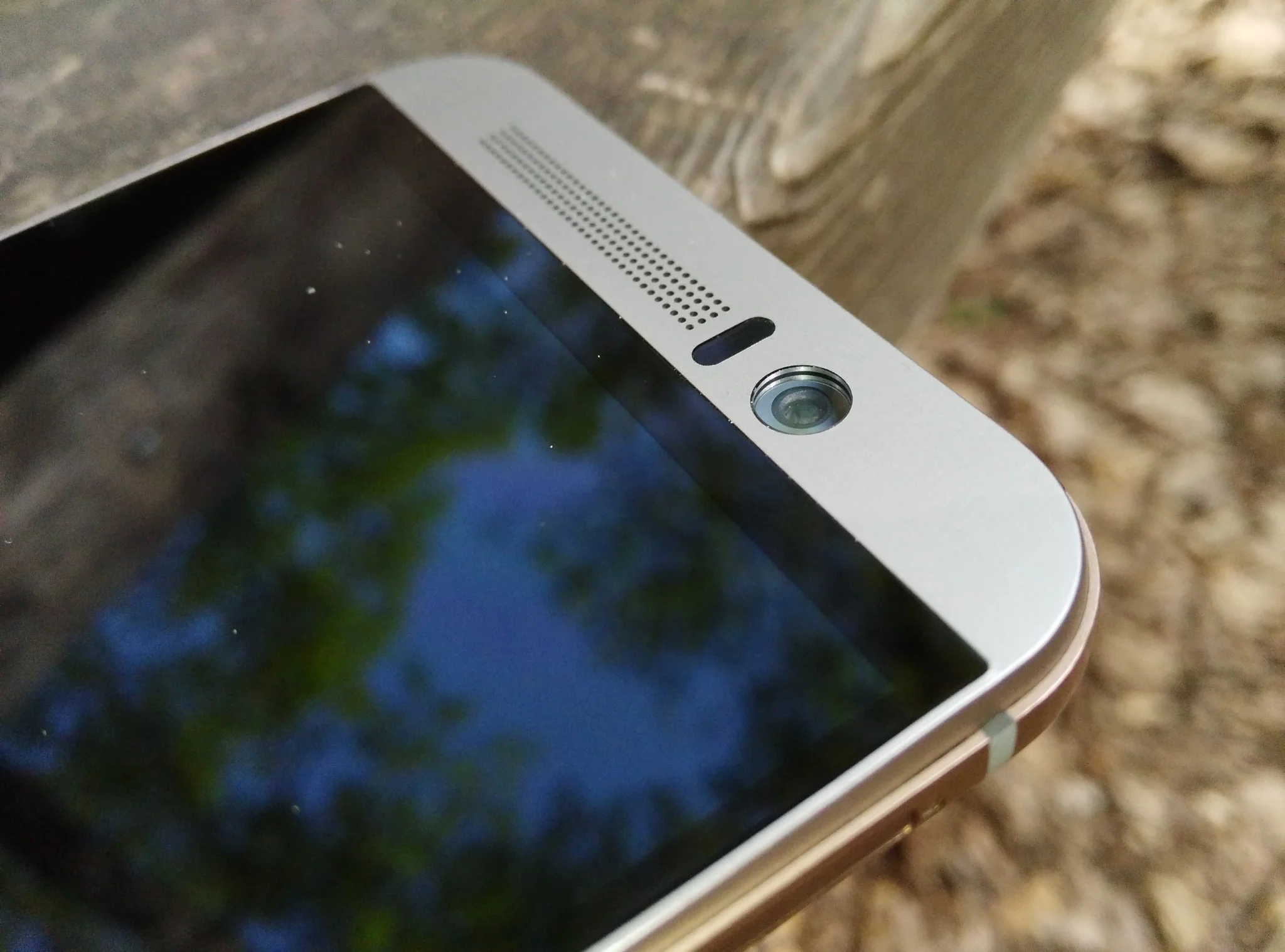
Before going any further, it’s worth walking around the phone from every angle. Up front, HTC keeps its signature stereo speakers, one above the display and one below it. Next to the top speaker sit the sensors and front-facing camera. Below that is a 5-inch Full HD display, the HTC logo, and the second elongated speaker grille.
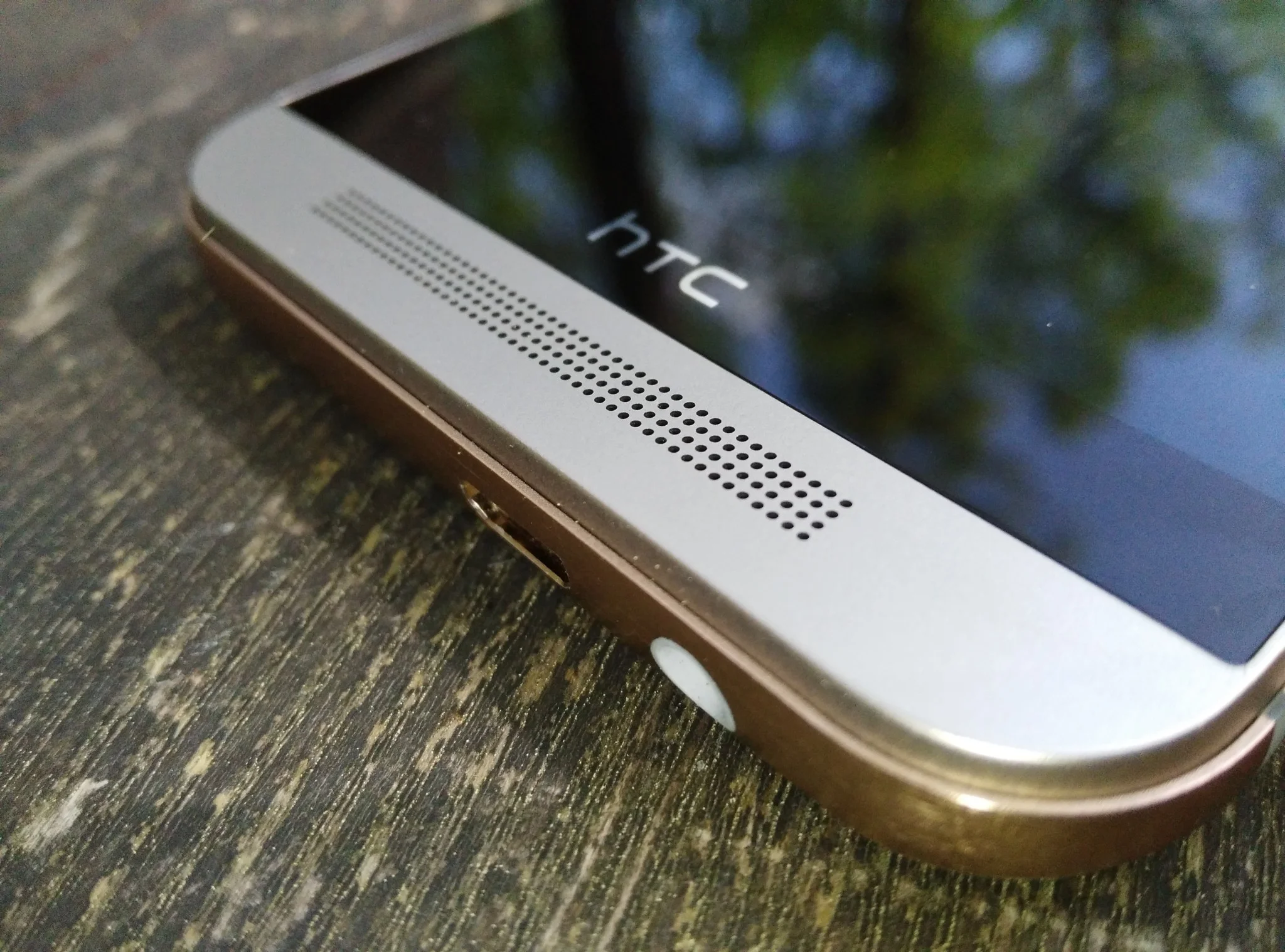
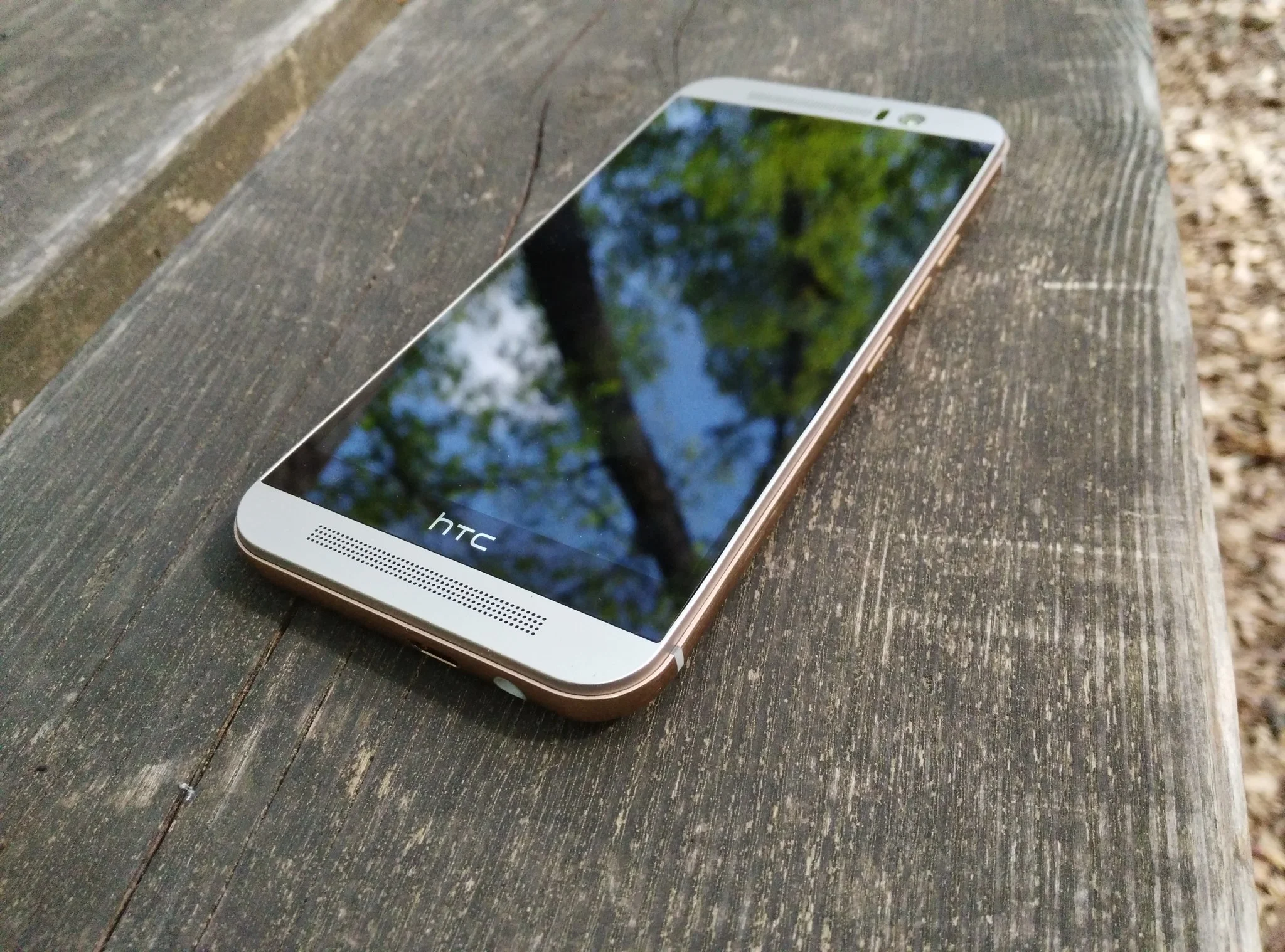
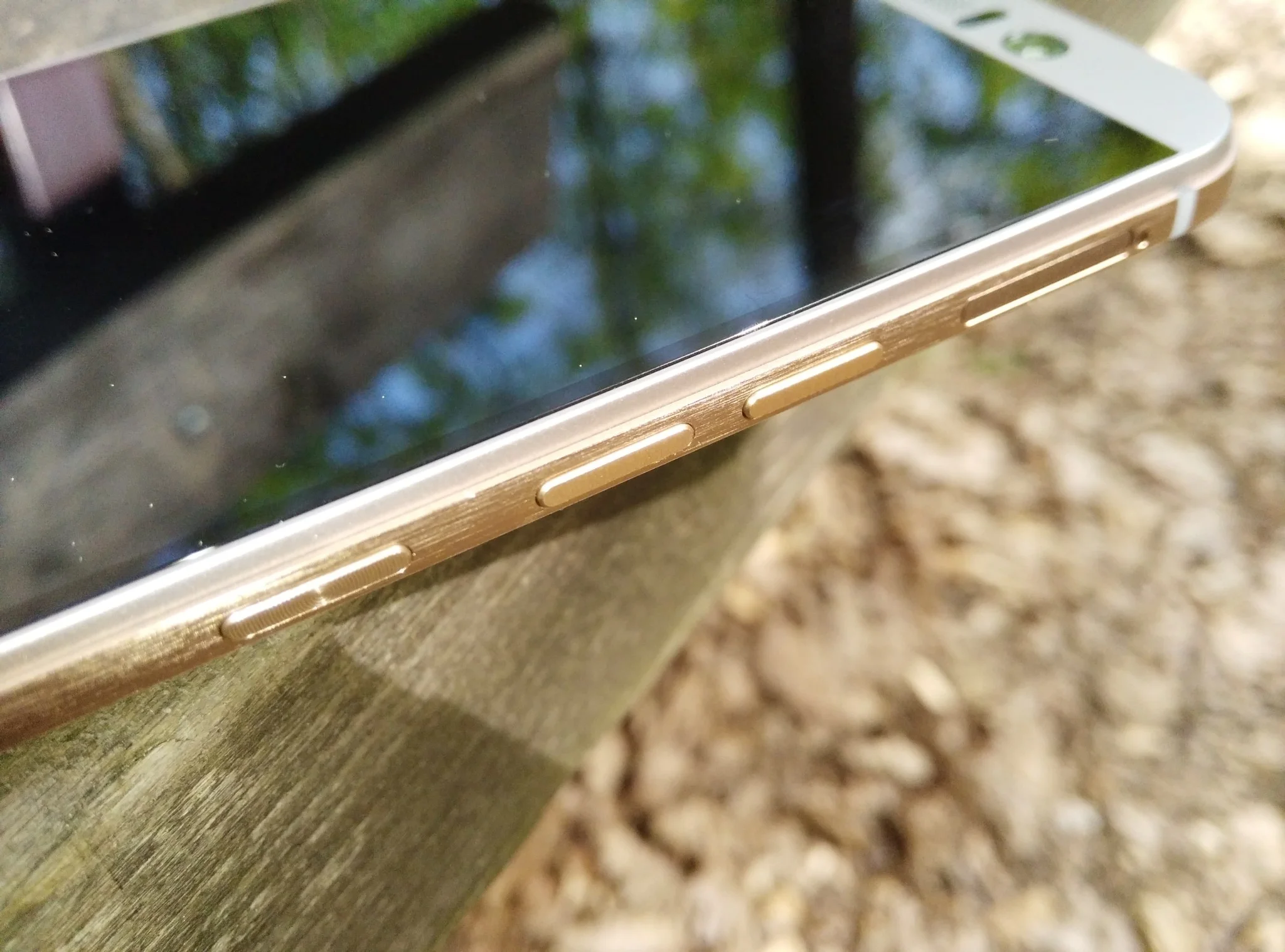
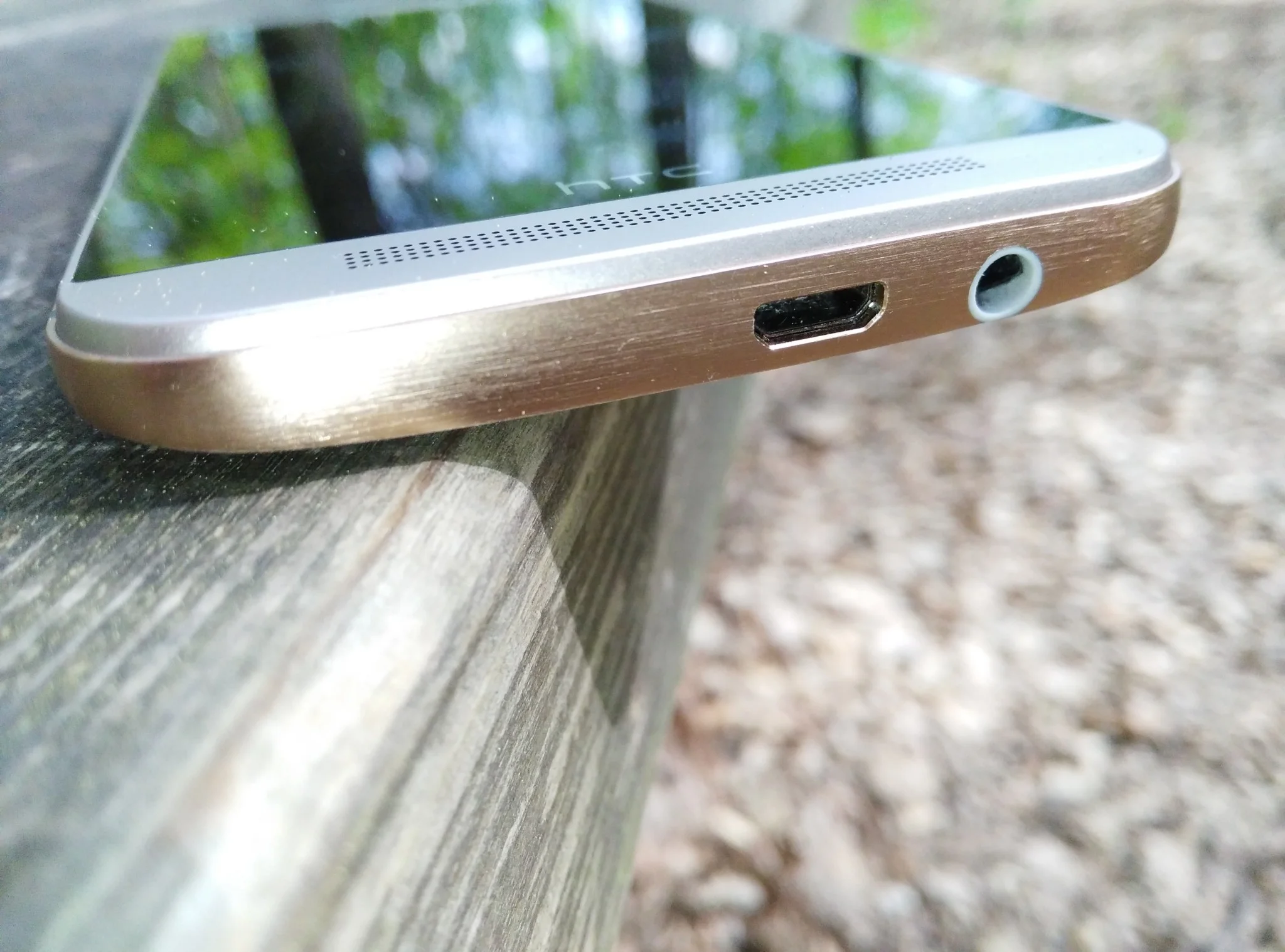
Along the sides you’ll find the buttons, trays, and ports. The top edge is mostly empty. On the bottom, there’s just a microUSB port and a 3.5mm headphone jack. Each side has a tray near the top: the left one is for a nanoSIM, while the right one holds a microSD card. Beneath that right-side tray are the buttons, with the power key using a different texture than the other two, making it easier to find by touch.
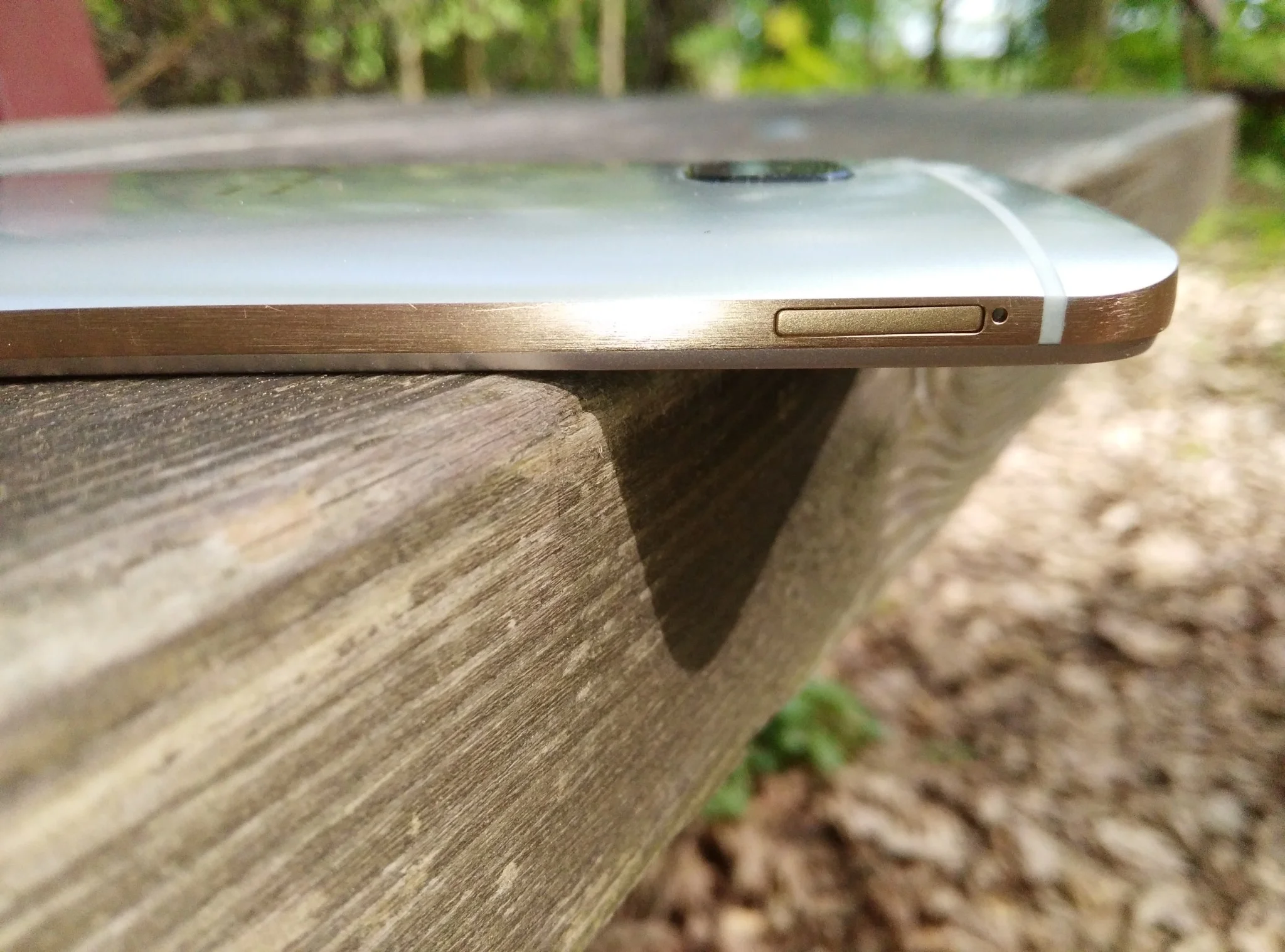
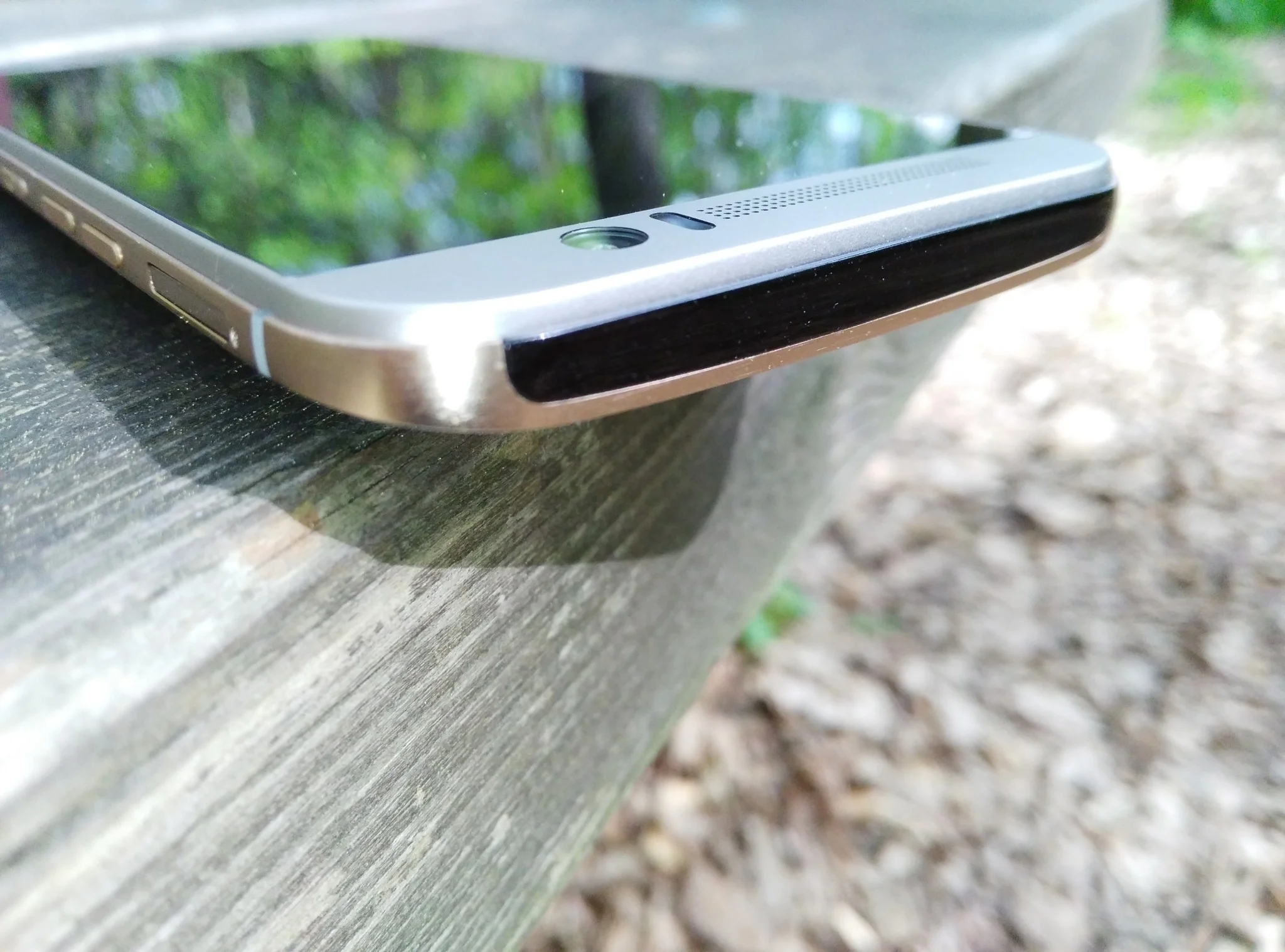
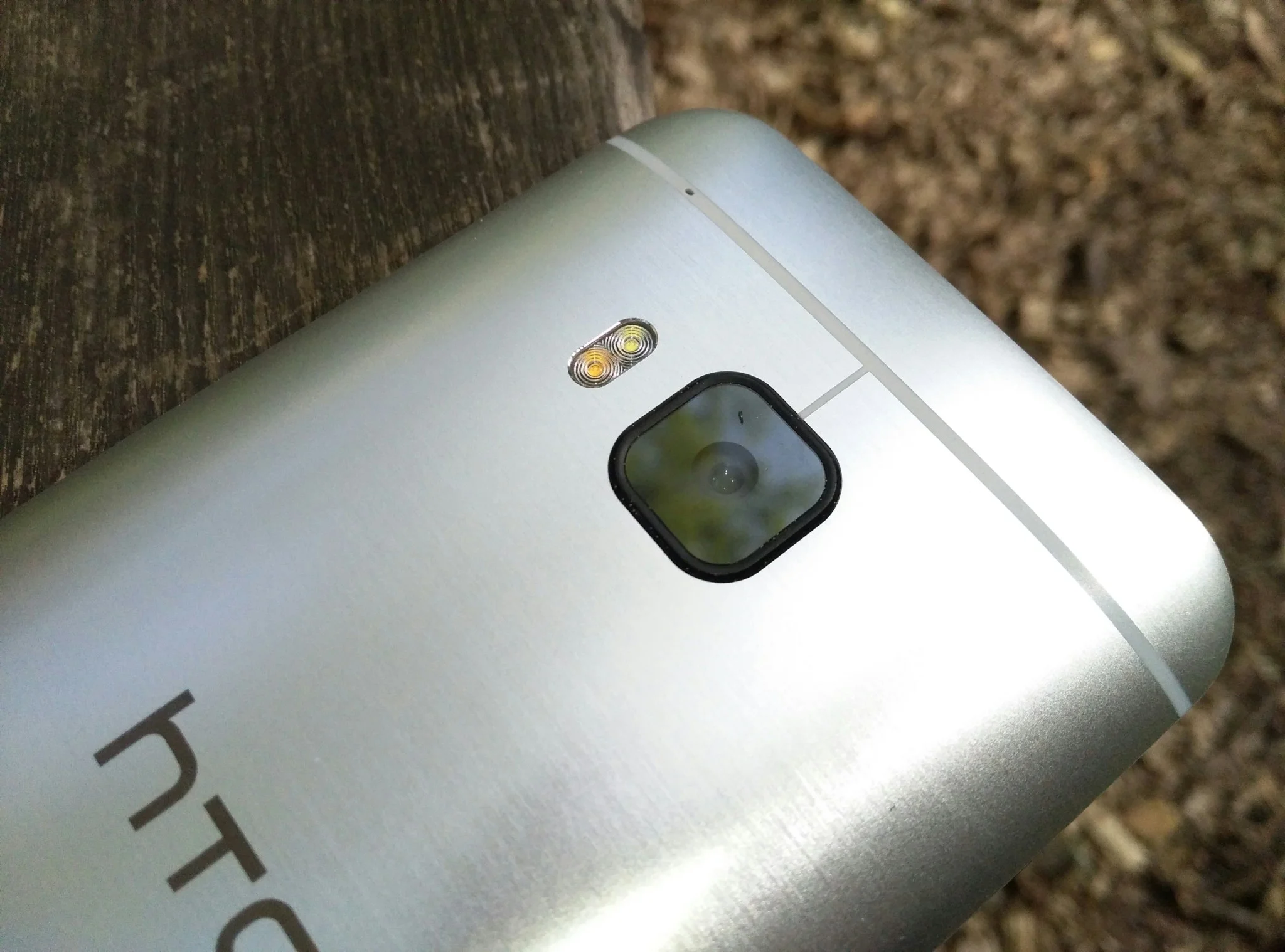
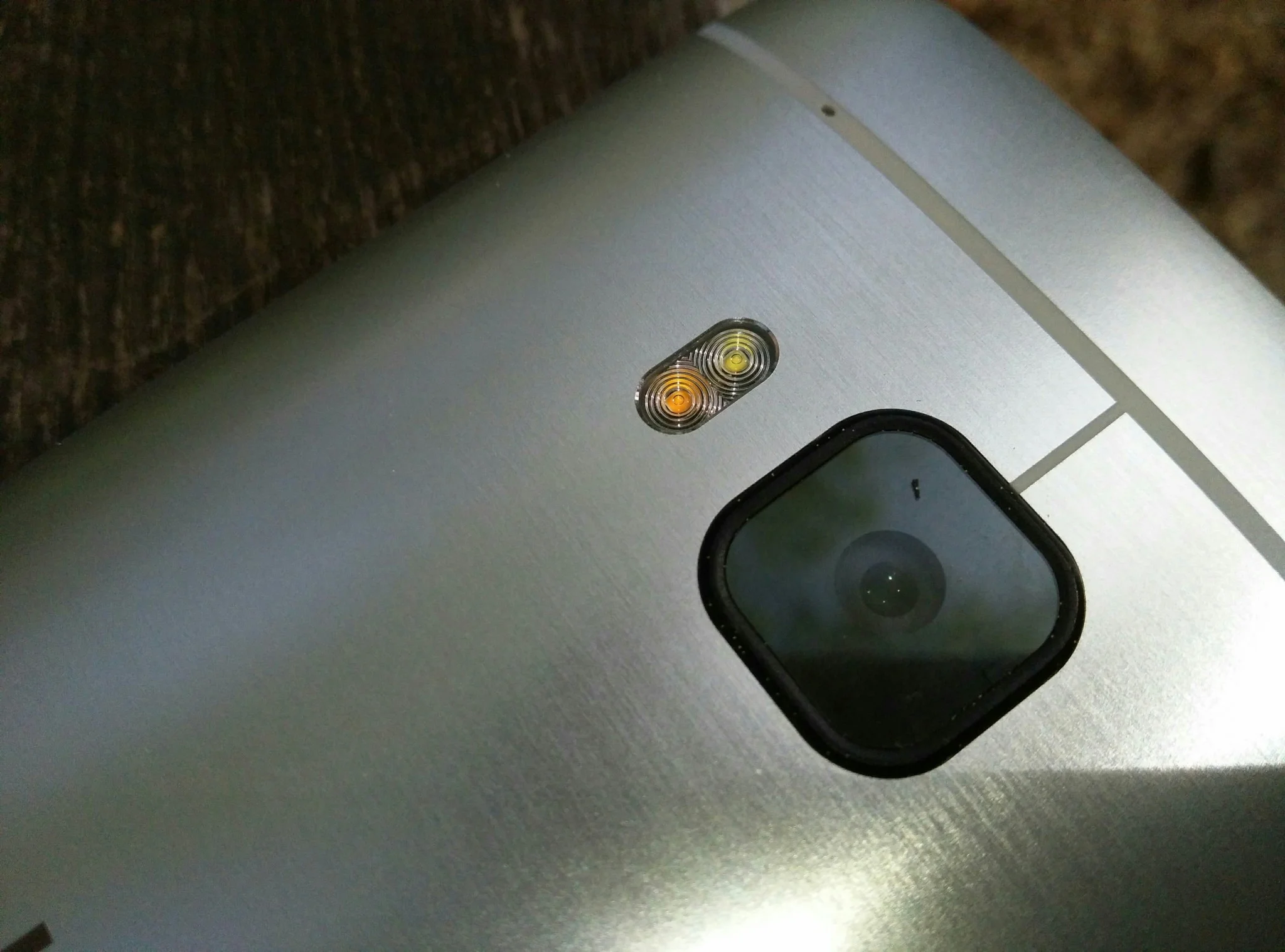
On the back, the main visual feature is the large 20.7MP camera lens, joined by a dual-LED flash and HTC branding. You can also spot plastic strips at the top and bottom, even though the rear panel itself is metal, but they don’t stand out much in everyday use. The back is slightly curved and rounded at the edges so the phone sits more naturally in the hand. It’s a smart idea on paper, but paired with the sharper edges around the front, the effect feels compromised.
Is the metal back actually a good thing?
In theory, yes. In practice, it’s more complicated. HTC used the much-discussed Snapdragon 810 here, and that chip makes the metal body feel less like a premium perk and more like a liability. When the phone isn’t heating up beyond normal levels, the rear panel helps dissipate warmth and feels perfectly fine.
Unfortunately, the processor’s occasional heat spikes mean the metal shell can get uncomfortably warm. That has an immediate effect on the user experience. If it happened only rarely, most buyers would probably shrug it off. But it doesn’t. And it’s worth saying plainly: software updates are unlikely to fully fix that problem.
Hardware
On paper, at least, the hardware here is pretty solid. Qualcomm’s octa-core Snapdragon 810, clocked at up to 2 GHz, has enough muscle for demanding apps, while the Adreno 430 handles graphics duties smoothly. Power comes from a 2,840 mAh battery with fast charging support, rated to hit 60 percent in 30 minutes.
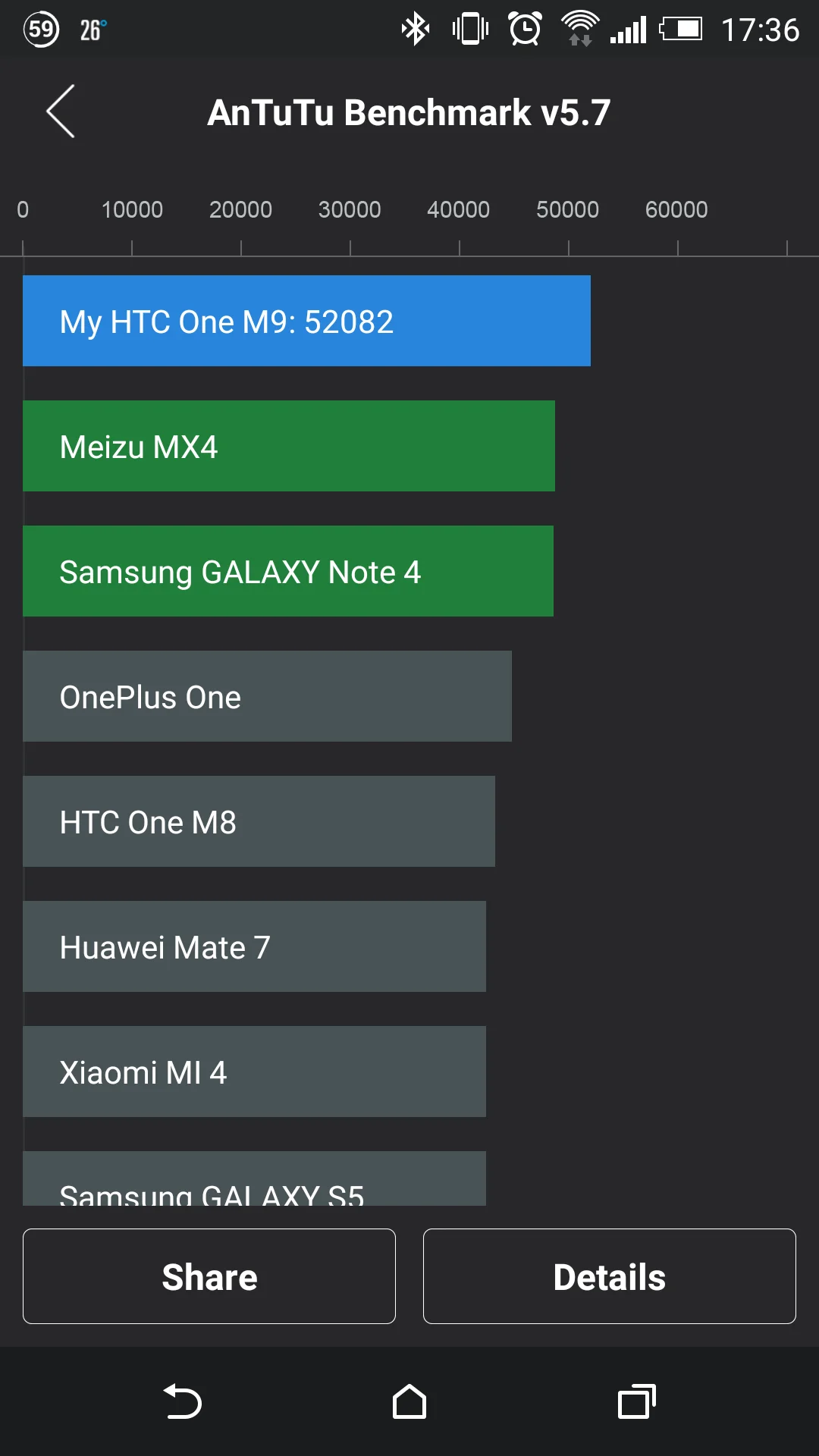
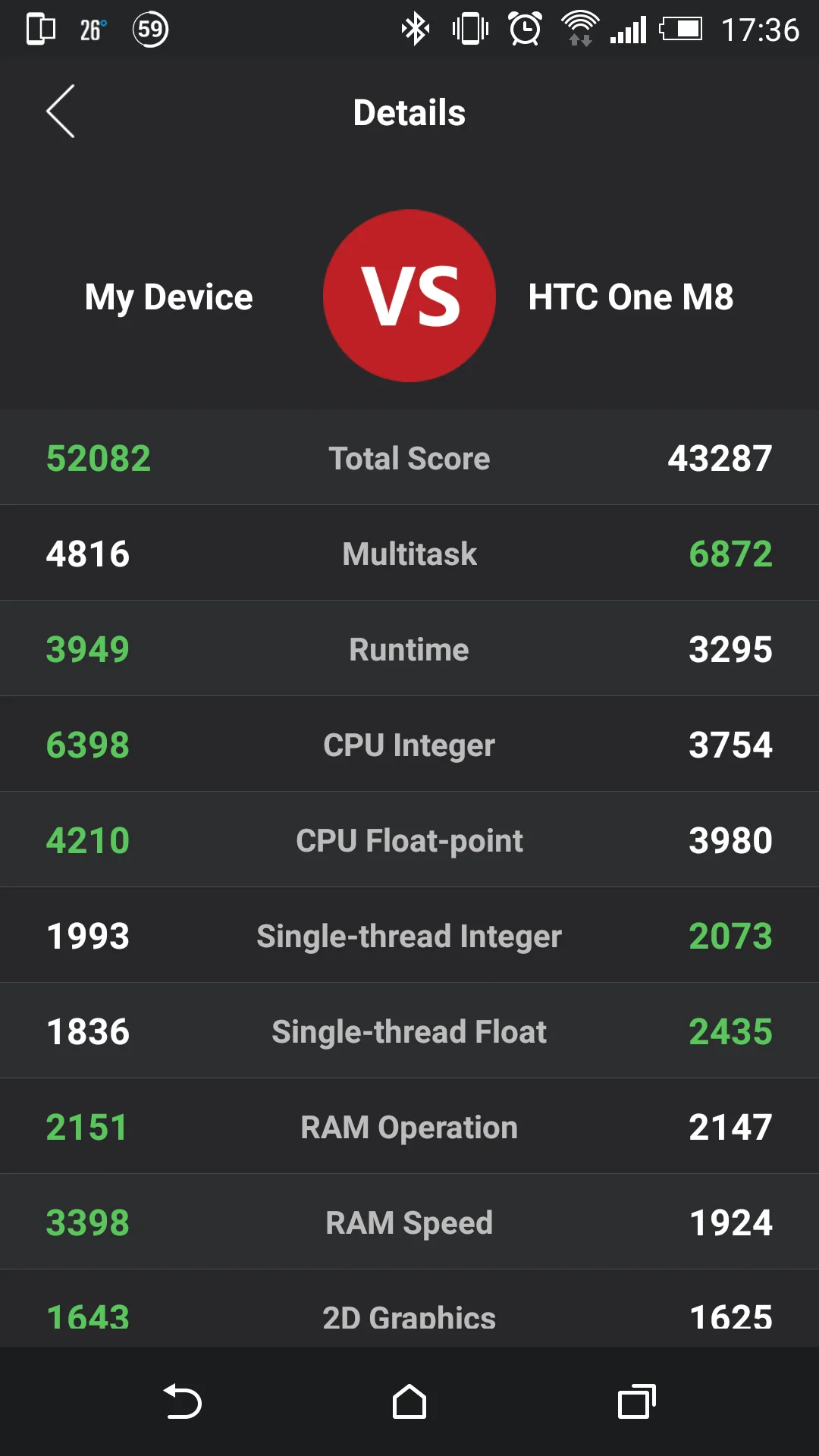
The phone measures 144.6 x 69.7 x 9.6 mm and weighs 157 grams. It packs 3 GB of RAM and 32 GB of internal storage, expandable by up to another 128 GB via microSD. As mentioned earlier, the main camera is a respectable 20.7 MP, with support for 2160p at 30fps, 1080p at 60fps, and 720p at 120fps video capture. HDR is included, though OIS is missing. One last hardware note: in the AnTuTu benchmark, the device scored 52,082 points.
Device specifications
- display – 5-inch IPS, Full HD resolution (1080 x 1920 px), ~441 PPI
- operating system – Android 5.0.1 Lollipop (with HTC Sense 7.0 on top)
- dimensions – 144.6 x 69.7 x 9.6 mm
- weight – 157 grams
- SoC – quad-core 1.5 GHz Cortex-A53 and quad-core 2 GHz (Qualcomm Snapdragon 810)
- memory – 3 GB RAM with 32 GB of internal storage, expandable via microSD card by up to another 128 GB
- camera – rear 20.7 MP (2160p@30fps, 1080p@60fps, 720p@120fps, HDR), front 4 MP
- battery – 2,840 mAh capacity
- other features – fast charging (60% in 30 minutes), Bluetooth 4.1, NFC, Wi‑Fi 802.11 a/b/g/n/ac, GPS, 3G, LTE, motion sensor, digital compass
Do the front-facing dual speakers actually deliver?
If you spend a lot of time watching videos or listening to music on your phone, speakers matter. With the One M9, I expected the front-facing dual speakers, placed at both the top and bottom of the front panel, to really throw sound forward. In some situations, they do. They sound very good, and in a quiet room with little background noise, they’re more than adequate. HTC also helps things along with sound profiles that let you choose between playback tuned more like a “theater” or “home” setup.
The problem is volume. As ambient noise goes up, the speakers become far less useful. Sound quality is genuinely strong, and HTC deserves credit for that, but loudness just isn’t there. If you’re watching movies or videos at home in the evening, you’ll be perfectly happy. In a larger, less enclosed room, though, or with three or four other people around, it quickly becomes a struggle, and anyone farther away will have an even harder time hearing it.
Software
HTC has been using its own Android skin for years, and here that means Sense 7.0. The system’s core functionality hasn’t been radically reworked, but it still feels distinct from stock Android. The notification shade, for example, works much the same way, though its elements are arranged differently and can be customized. That’s useful if some of the default toggles or shortcuts don’t fit how you use the phone.
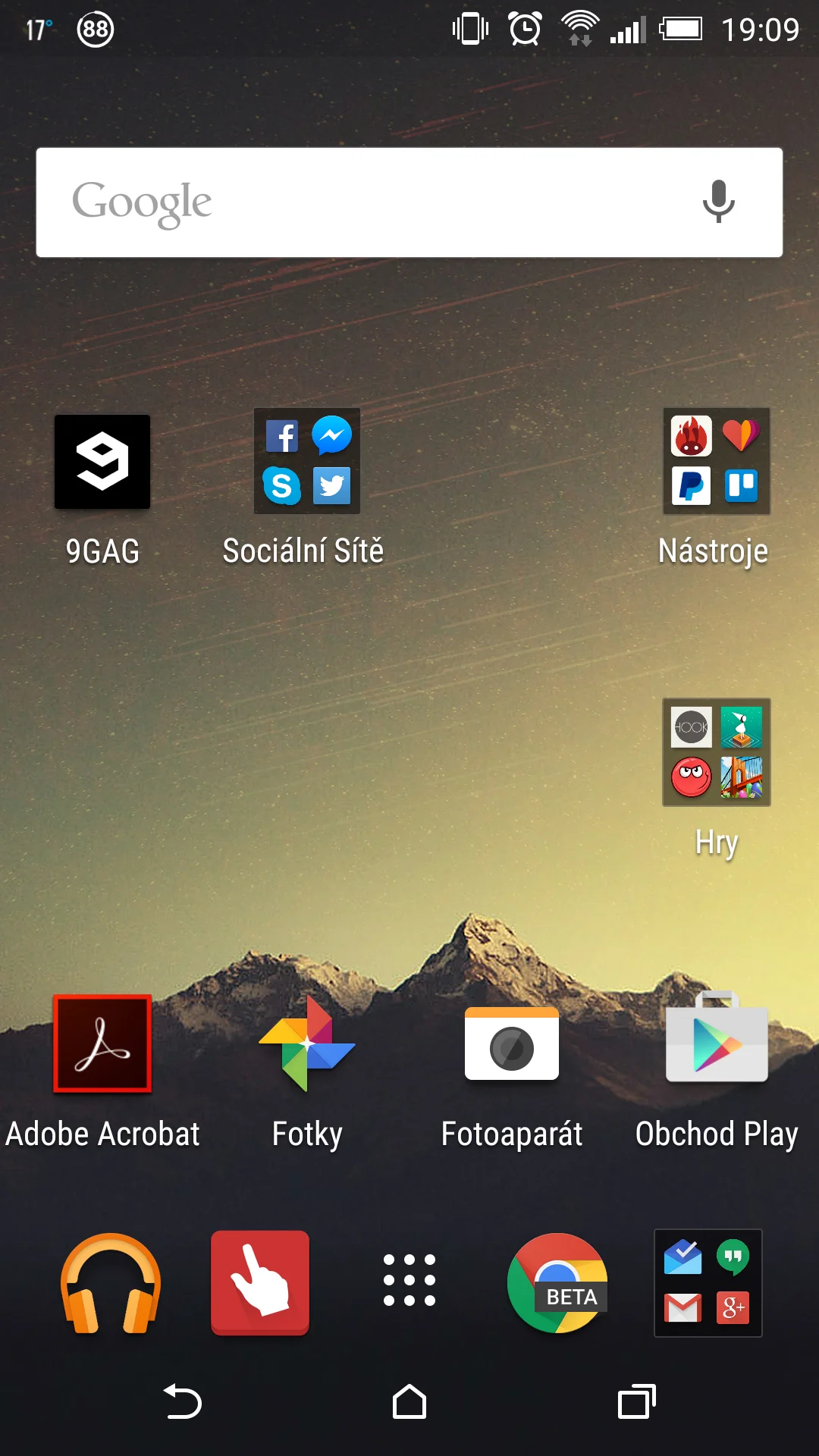

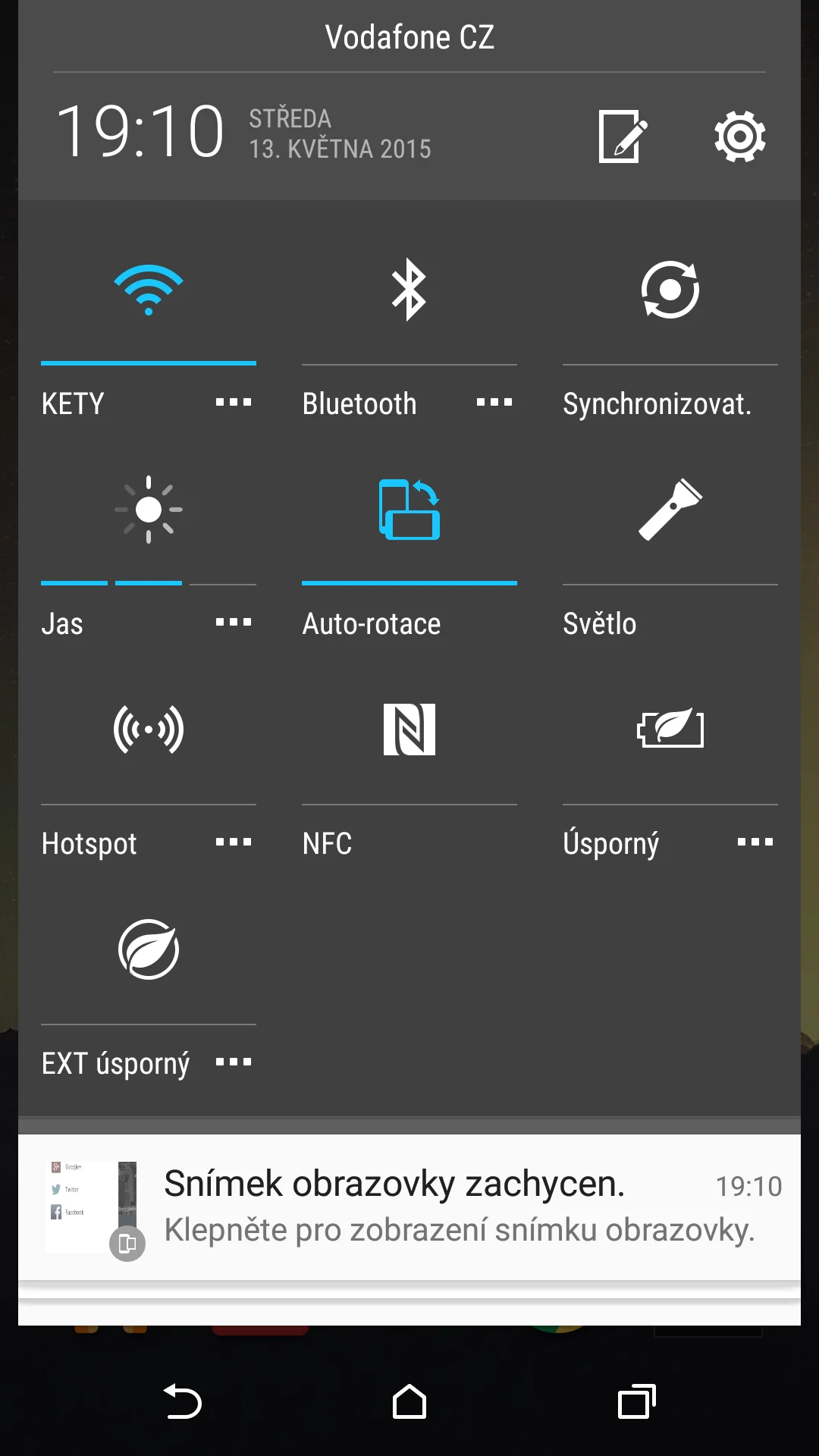
HTC BlinkFeed is here too, letting you keep up with a steady stream of information right from the home screen. You can scroll through it practically endlessly, or at least until older items run out. The same vertical approach applies to the app menu as well. Instead of swiping left and right between pages, you scroll up and down. Settings follows that same pattern, with one long list of options.

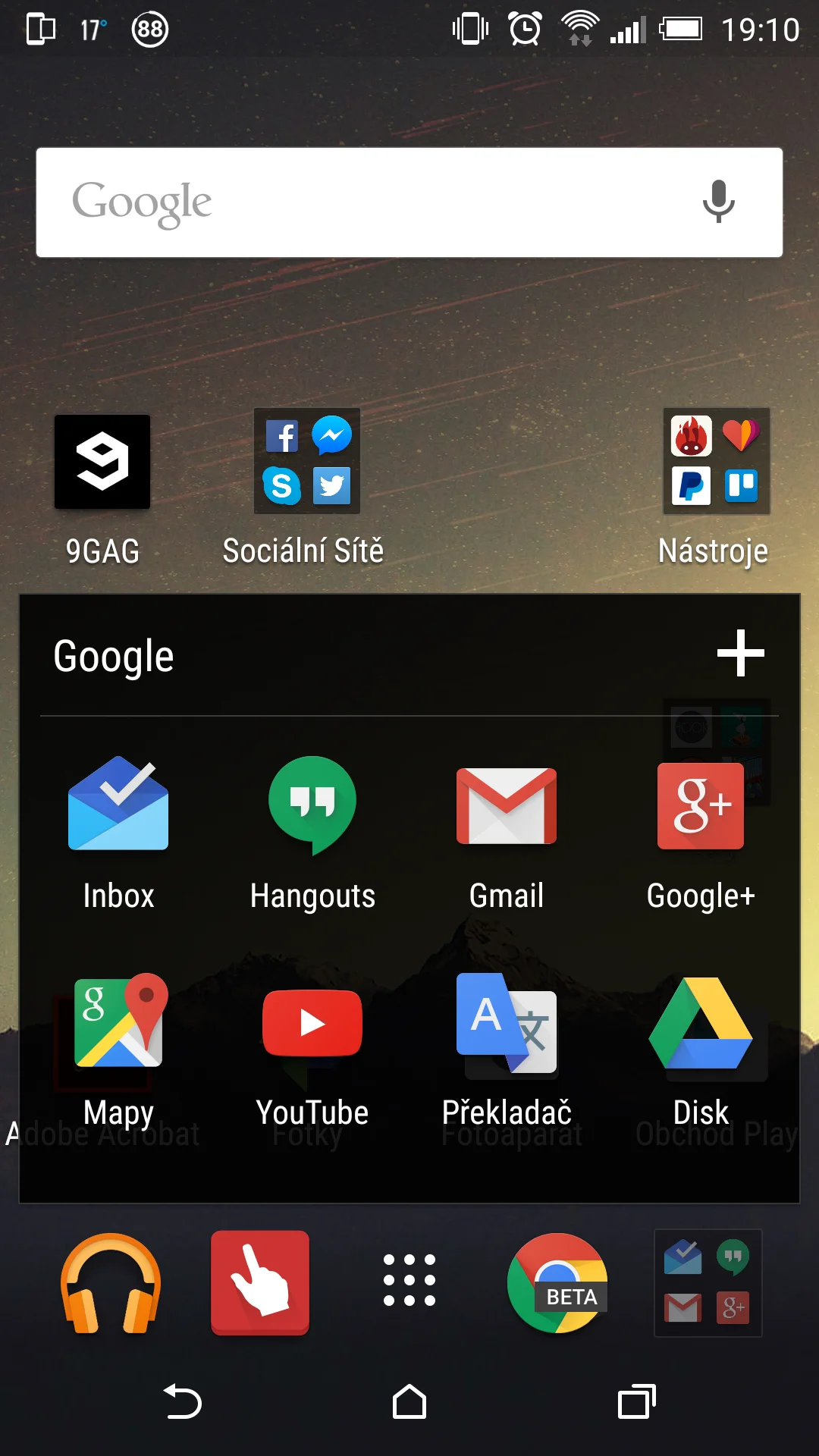
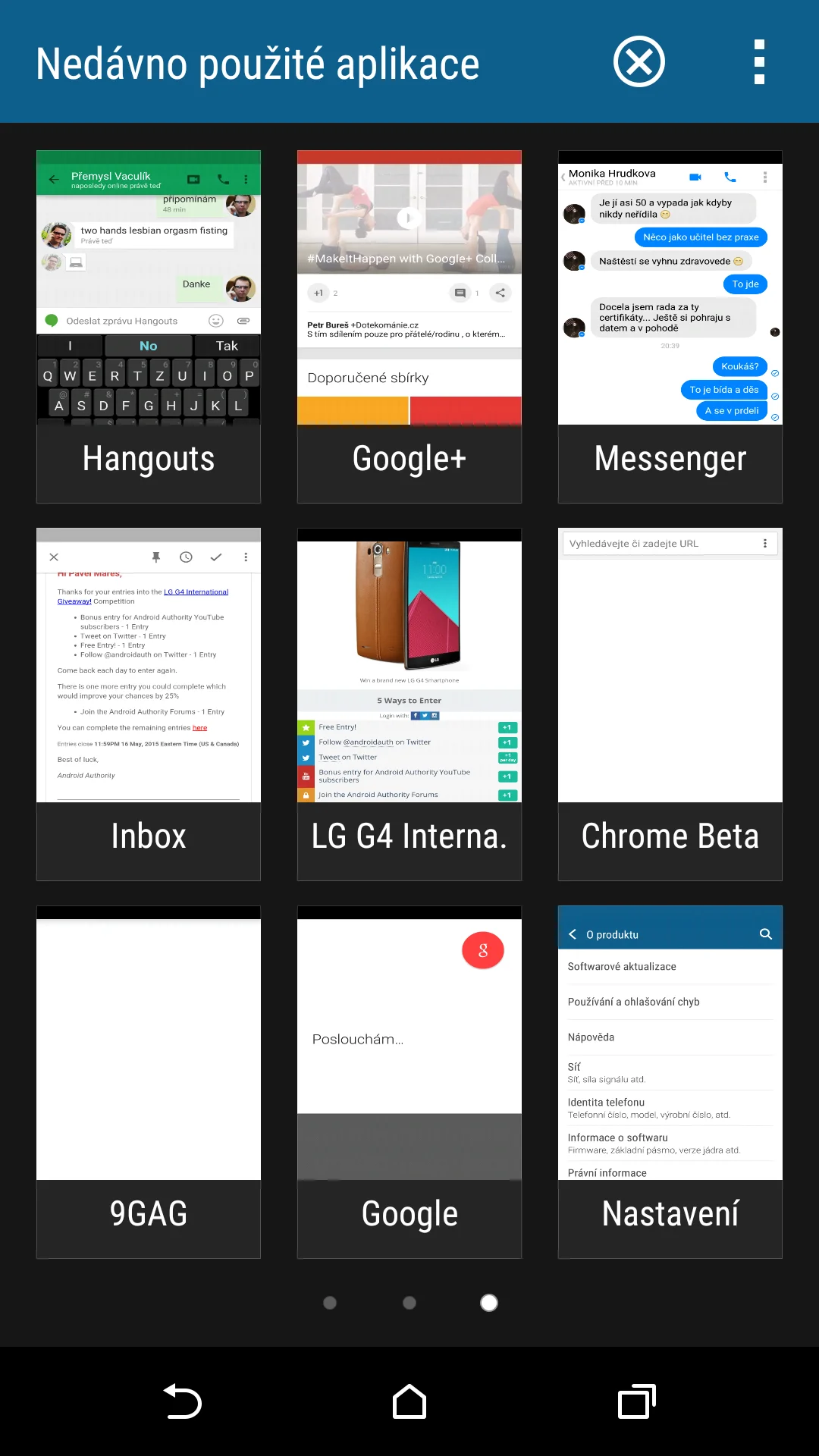
Personally, I wasn’t thrilled by the limited options for widgets and home screen customization, or by the fact that the preloaded BlinkFeed panel can’t be moved. I also had to laugh at some of the localization quirks, including the need to change the system language just to unlock the phone by swiping left on the lock screen.
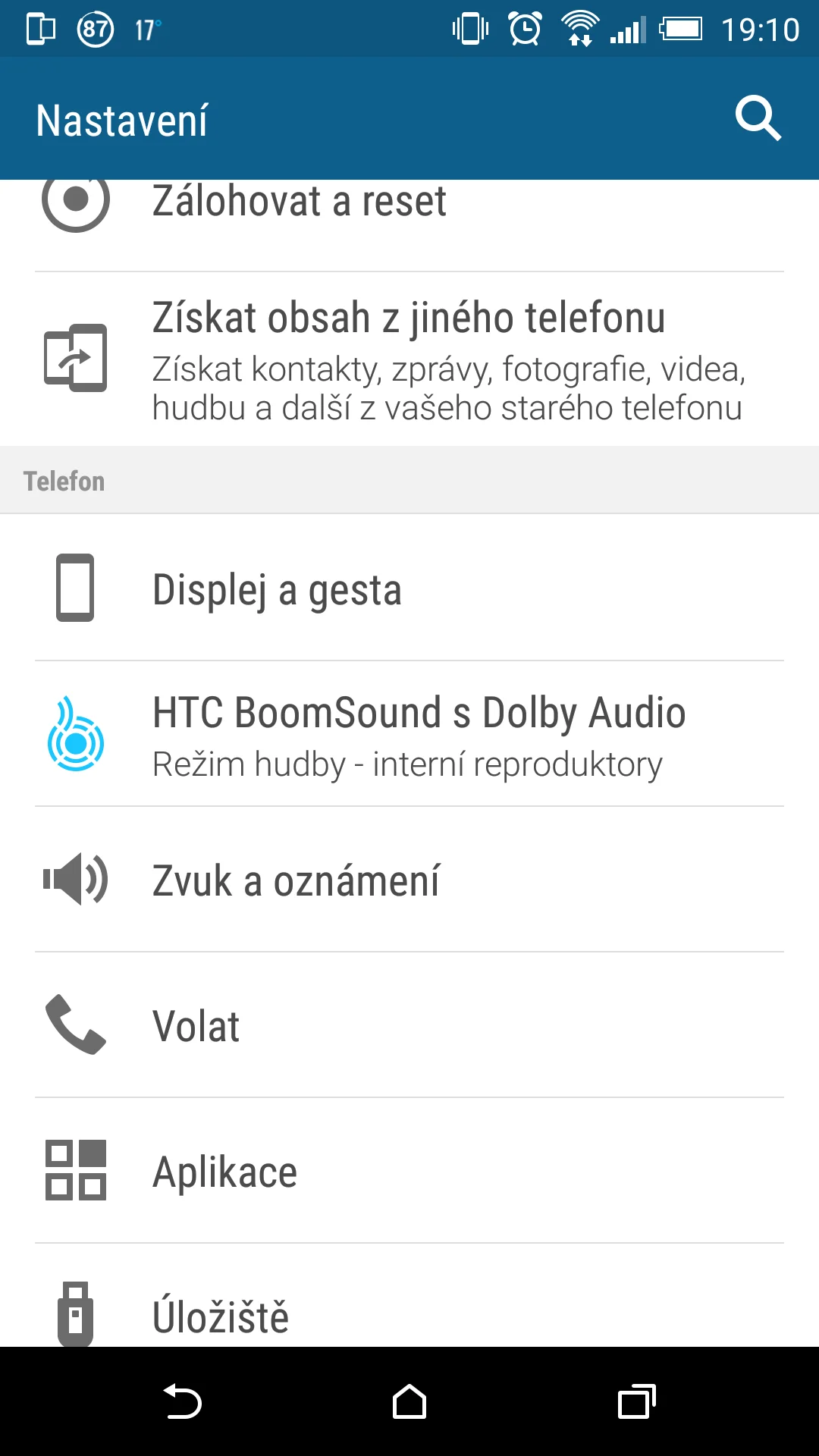
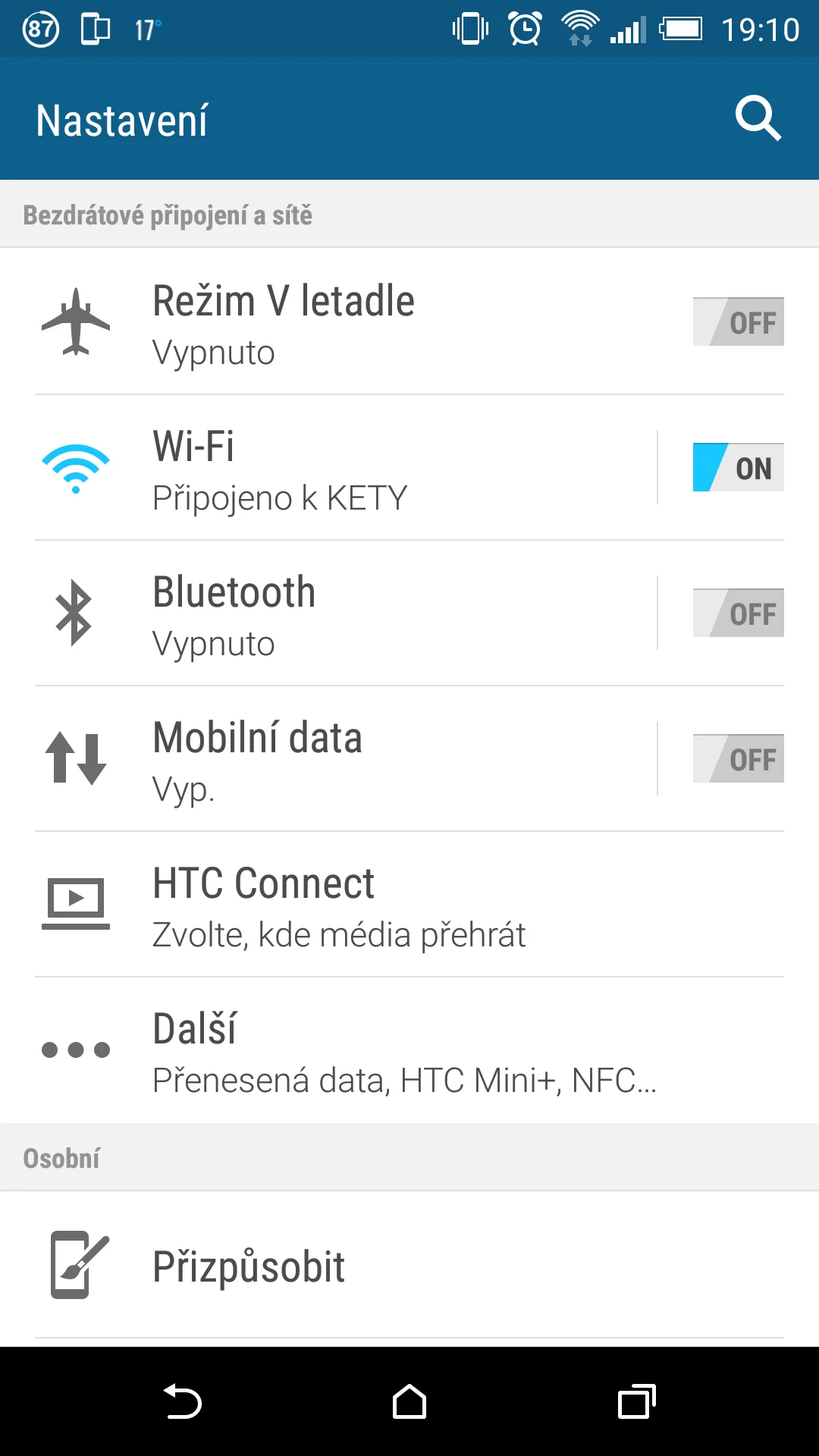
Smoothness also deserves a mention. There are no obvious stutters or major slowdowns, which makes sense given the hardware. Still, I was surprised by the slower, occasionally odd response when unlocking the device with a swipe across the screen.
Display
At least in this area, I really don’t have any complaints. HTC got this one right. Color reproduction is excellent, viewing angles are strong, and even on a bright sunny day the screen remains easy enough to see. Overall, the 5-inch IPS panel with Full HD resolution performed better than many competing displays.
Camera
This is the part of the review that ends up being the biggest letdown. During the official One M9 launch, HTC spent plenty of time talking up its 20.7MP camera. Unfortunately, the reality is the opposite, and the resulting photos don’t come close to matching other flagship phones. You can see that for yourself in the camera comparison, which also includes additional sample shots: Camera test: LG G Flex 2 vs. HTC One M9 (in Czech). About the only clear positives are fast autofocus, quick capture, and somewhat better handling of darker areas.
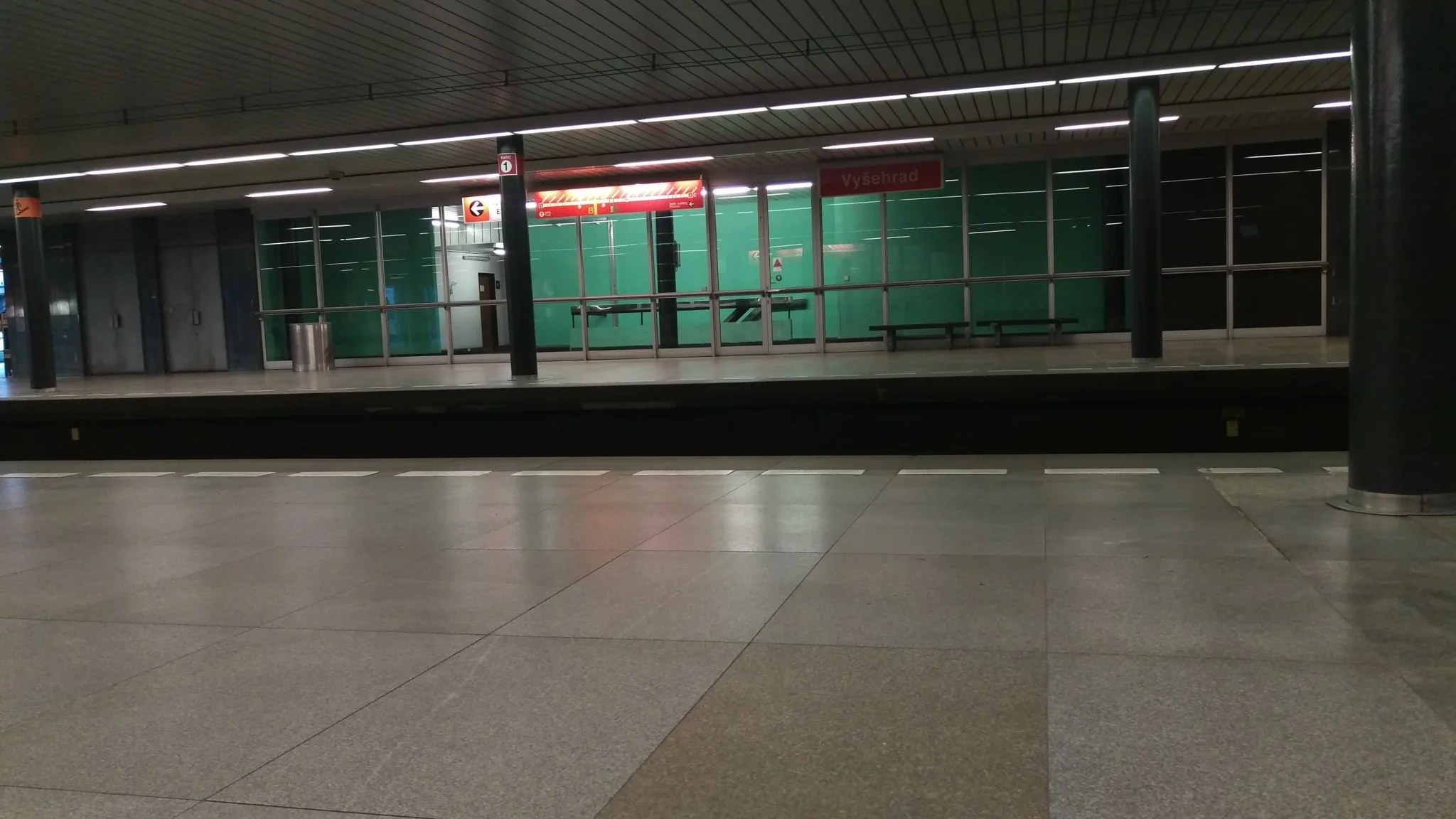


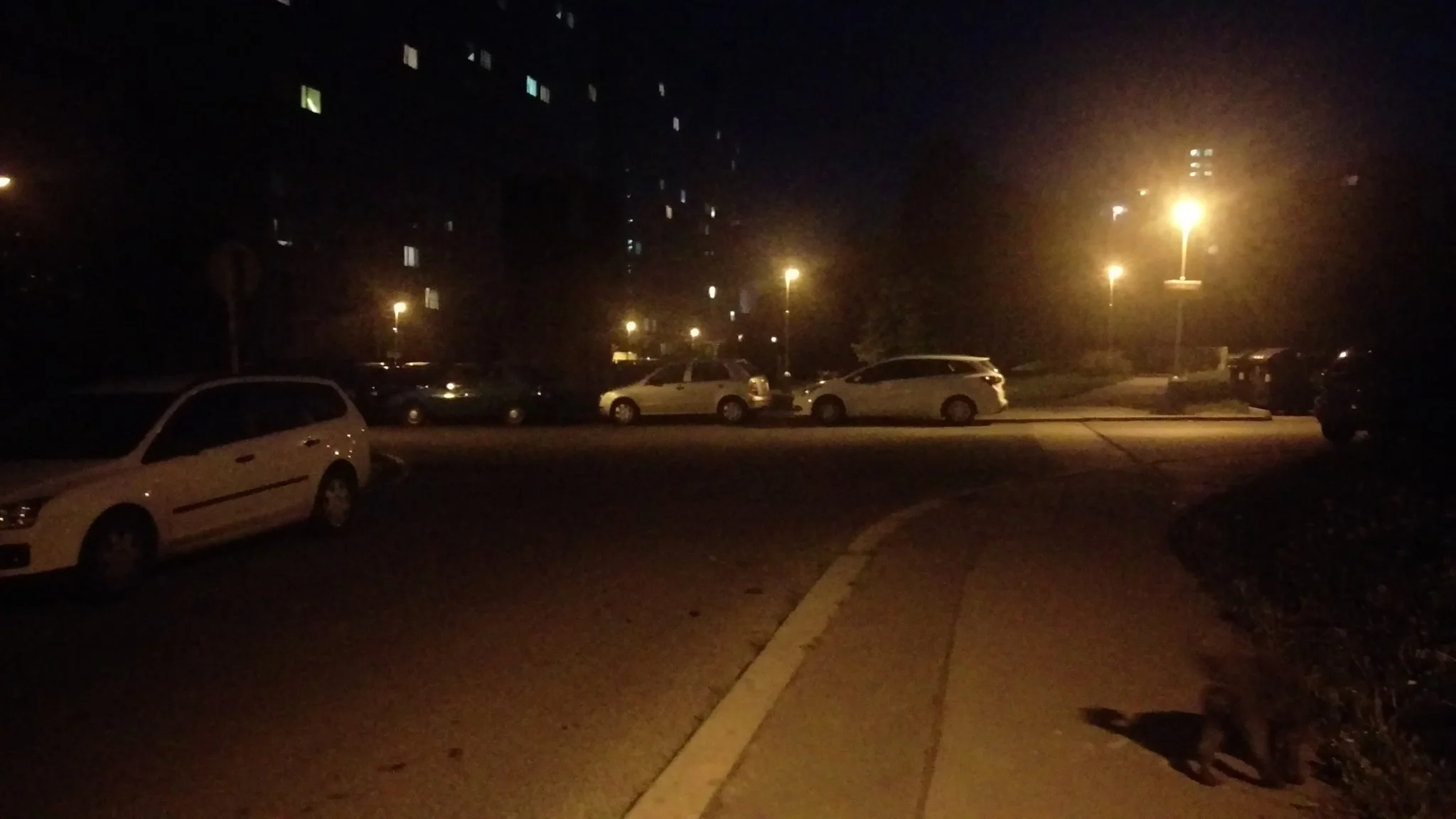
Right from the first shots, it’s obvious the sensor struggles with light sources and reflections. Image rendering also falls well short of what HTC promised, even when a shot turns out reasonably well. Low-light photography is another weak spot. Noise shows up everywhere, and the results look rough. You can judge that for yourself in the photos below.

Autofocus sample



Battery life
Unfortunately, this is another area where HTC fans won’t find much comfort. Because of the poor processor choice and the relatively small 2,840 mAh battery, you can forget about getting more than a day of use, and even that can be a stretch. Within the first few days, it was clear the phone struggled to make it through a full charge cycle. For a flagship at this price, that’s a serious problem.
Normally, it would be enough to say this is a phone for light users. But that doesn’t really fit what the HTC One M9 is supposed to be. If you want better battery life, you’ll need to cut back on gaming and web browsing.
Final verdict
This is an especially difficult phone to score. The One M9 feels, in large part, like a blend of the M7 and M8, with a bit of extra shine on a few components. The display didn’t change in any meaningful way, and the overall design is only slightly refined, while the secondary camera on the upper rear panel is gone.
The hardware is better in some respects, including a larger battery and stronger graphics performance, but the processor wipes out many of those advantages with severe overheating, including the phone’s raw speed. As for the headline features HTC pushed the hardest, Sense 7.0 on Android 5.0 Lollipop and the camera, the device fails to deliver anything especially impressive.
Bottom line
If you absolutely have to own HTC’s latest flagship, this verdict probably won’t change your mind. But if you’re looking for a dependable phone whose high price signals high quality, there’s bad news here. Right now, buyers are better off picking up the HTC One (M8), or simply choosing a less expensive phone that delivers a very similar experience.
At Dotekomanie.cz, we regularly cover new devices and publish plenty of reviews, so if you’re shopping around, that’s as good a place as any to start.