
ZEROLEMON is a US-based accessory maker best known for batteries and charging gear, including Quick Charge 2.0 accessories. Over the years, the company has built a strong reputation in the mobile accessory space. For this review, we took a closer look at one of its more practical products: the ZeroLemon SolarJuice 20,000mAh solar power bank.
ZeroLemon SolarJuice 20,000mAh
Portable battery packs are standard gear for a lot of people now, mostly because modern devices still burn through battery life faster than anyone would like. This power bank aims to solve that problem the blunt way, with a 20,000mAh capacity.
The charger arrived in an attractive clear box, and the first impression is solid. In the package, you get a short manual with setup and usage instructions, a USB cable, and a metal carabiner that lets you clip the power bank to a backpack so it doesn’t swing around as much while you’re moving. The included cable is a little over 70 cm long, which turned out to be a practical length in daily use.

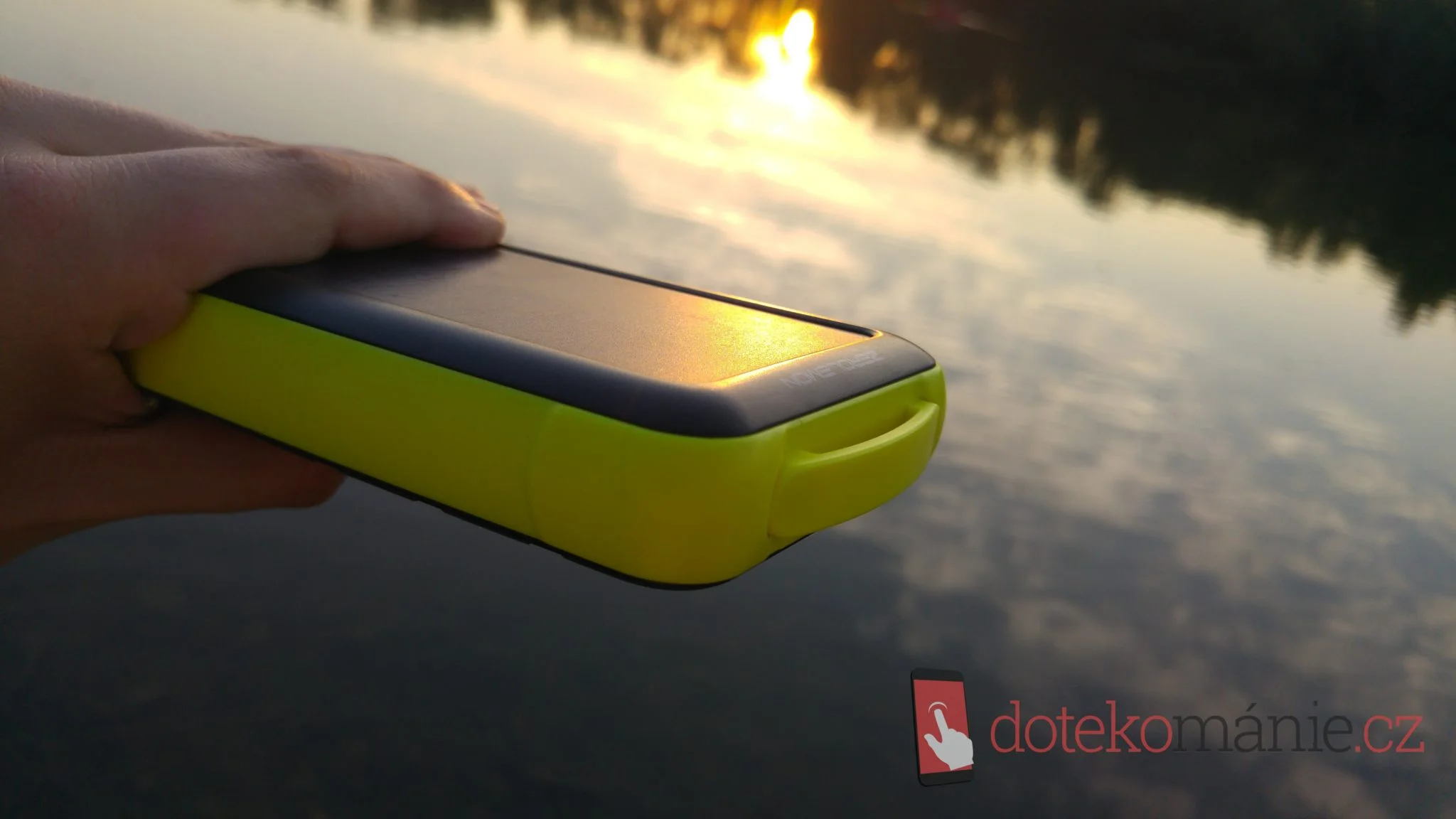
Once it’s out of the box, the charger feels sturdy in the hand. Nothing creaks, the materials feel durable, and the body gives off a reassuringly rugged vibe. It was better put together than expected. The top side is dominated by a solar panel that covers roughly 90 percent of the front surface, letting you recharge the pack in direct sunlight without wall power.
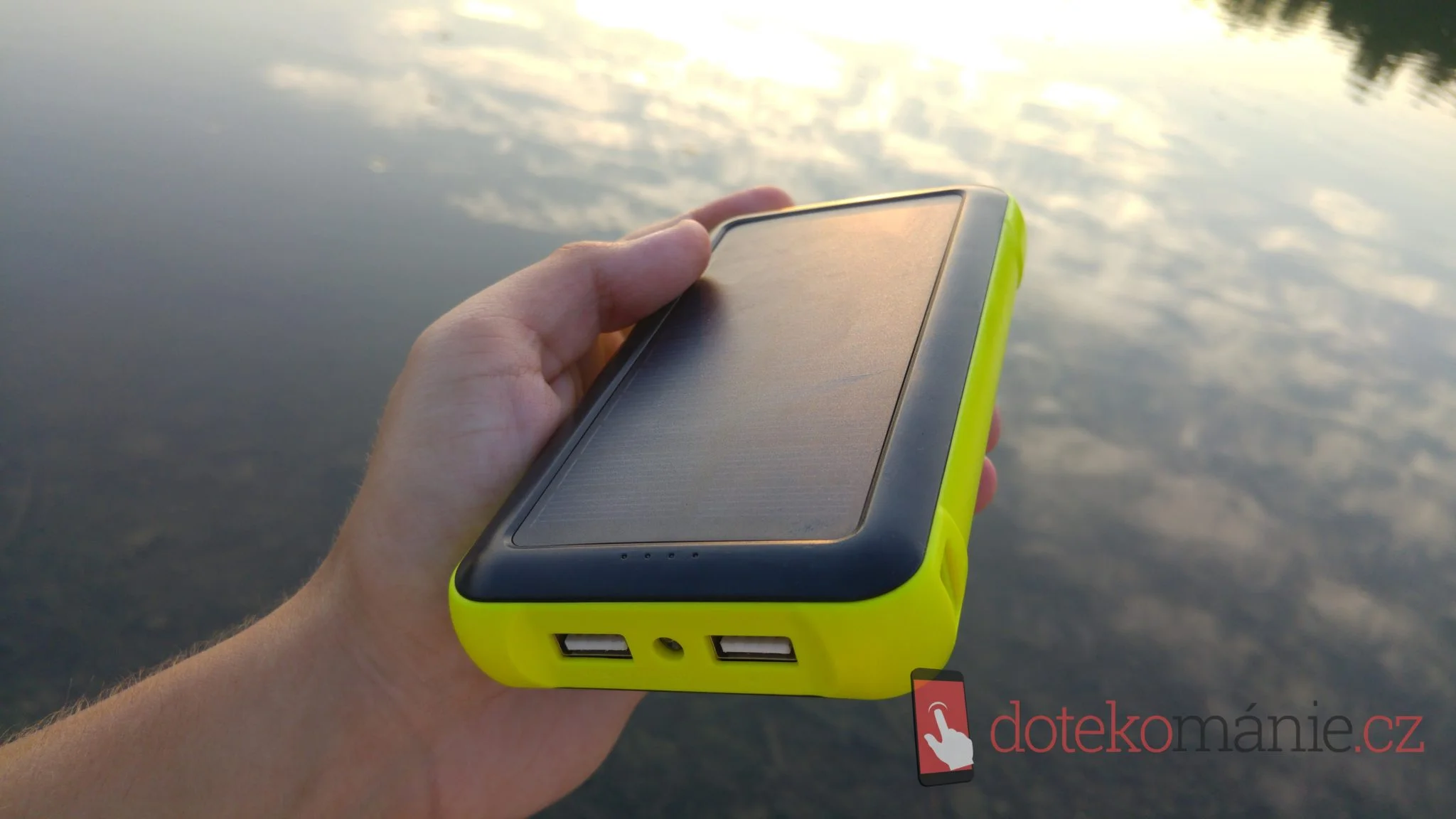
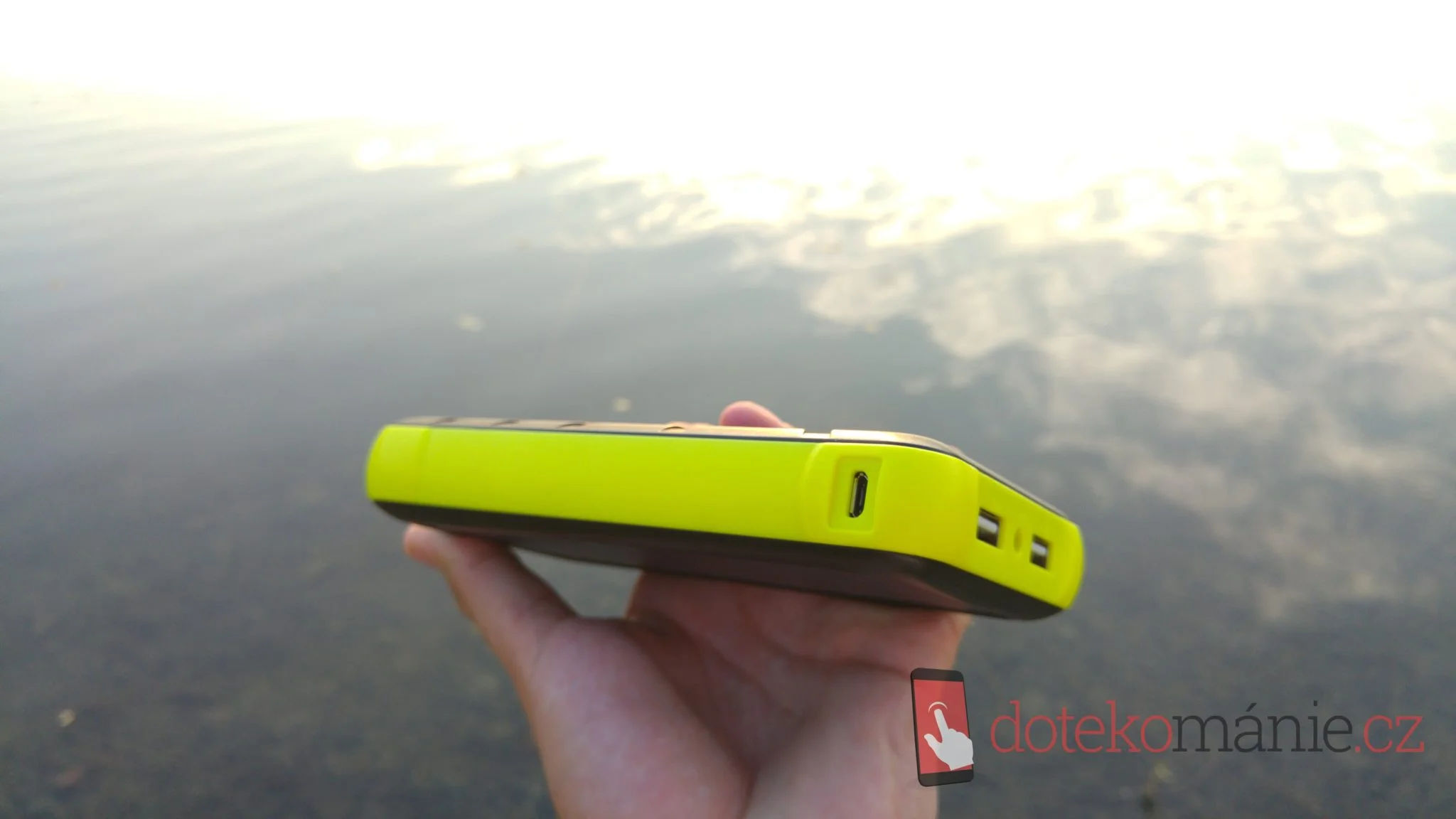
If the weather turns while it’s outside charging, that’s less of a problem than usual. The unit is water-resistant, which is a genuinely useful touch for a product built around outdoor use. On the lower part of the right side, there’s a microUSB input for charging from a wall adapter.
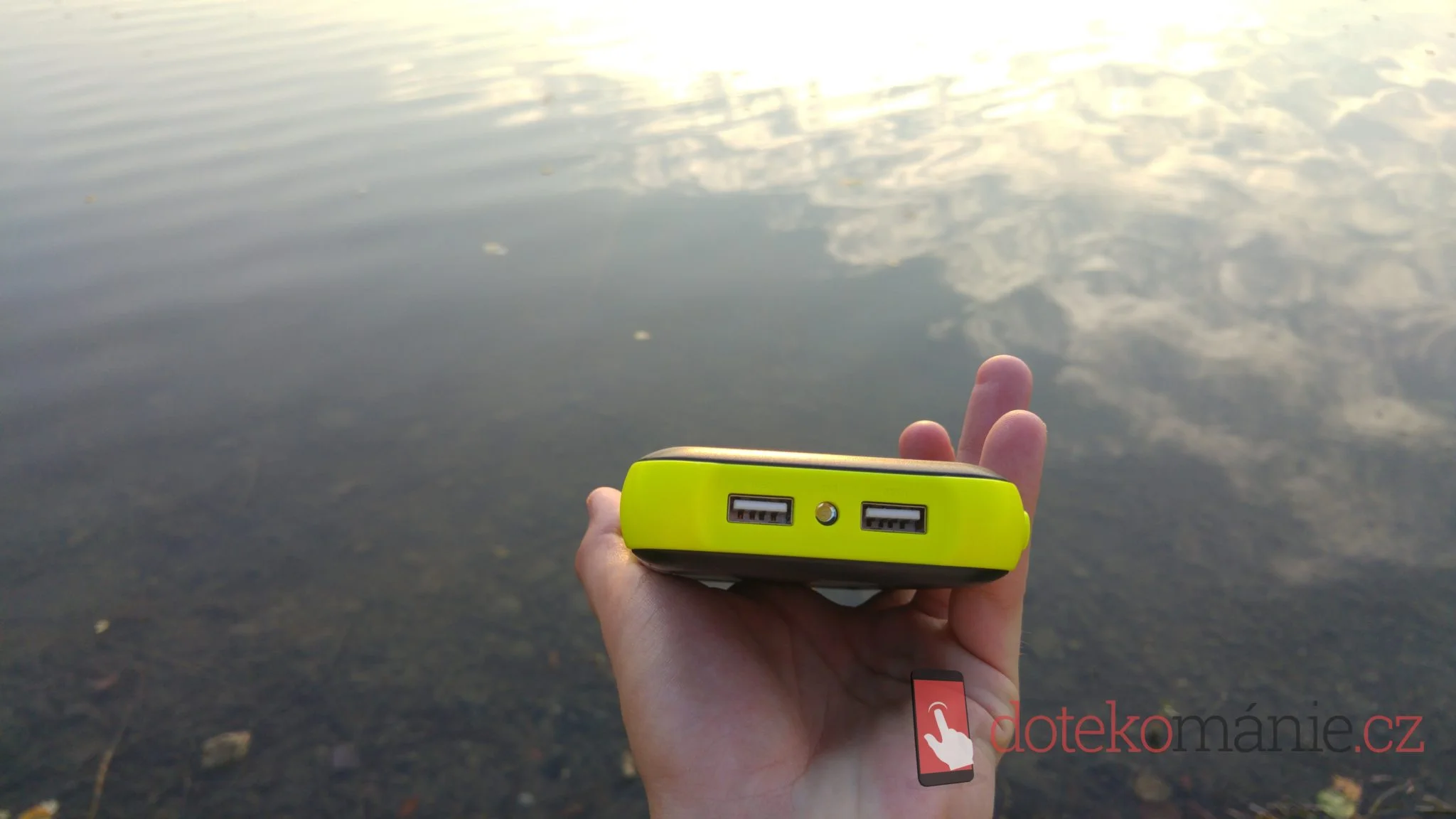
The bottom edge holds the important stuff: two USB outputs, so you can charge two devices at once. One port outputs 5V/2.1A, while the other is rated at 5V/1A. Between them sits an LED that doubles as a flashlight when you don’t have one nearby. Its brightness is good enough in complete darkness. A small round button on the lower left side turns the light on when held down.
Above the solar panel, there are four small blue status LEDs that show the current charge level. The device weighs 483 g, which is a lot, and you’ll feel it. Still, if you want the confidence to keep your phone or tablet going through a long day, or even several days, the extra heft comes with a clear benefit.
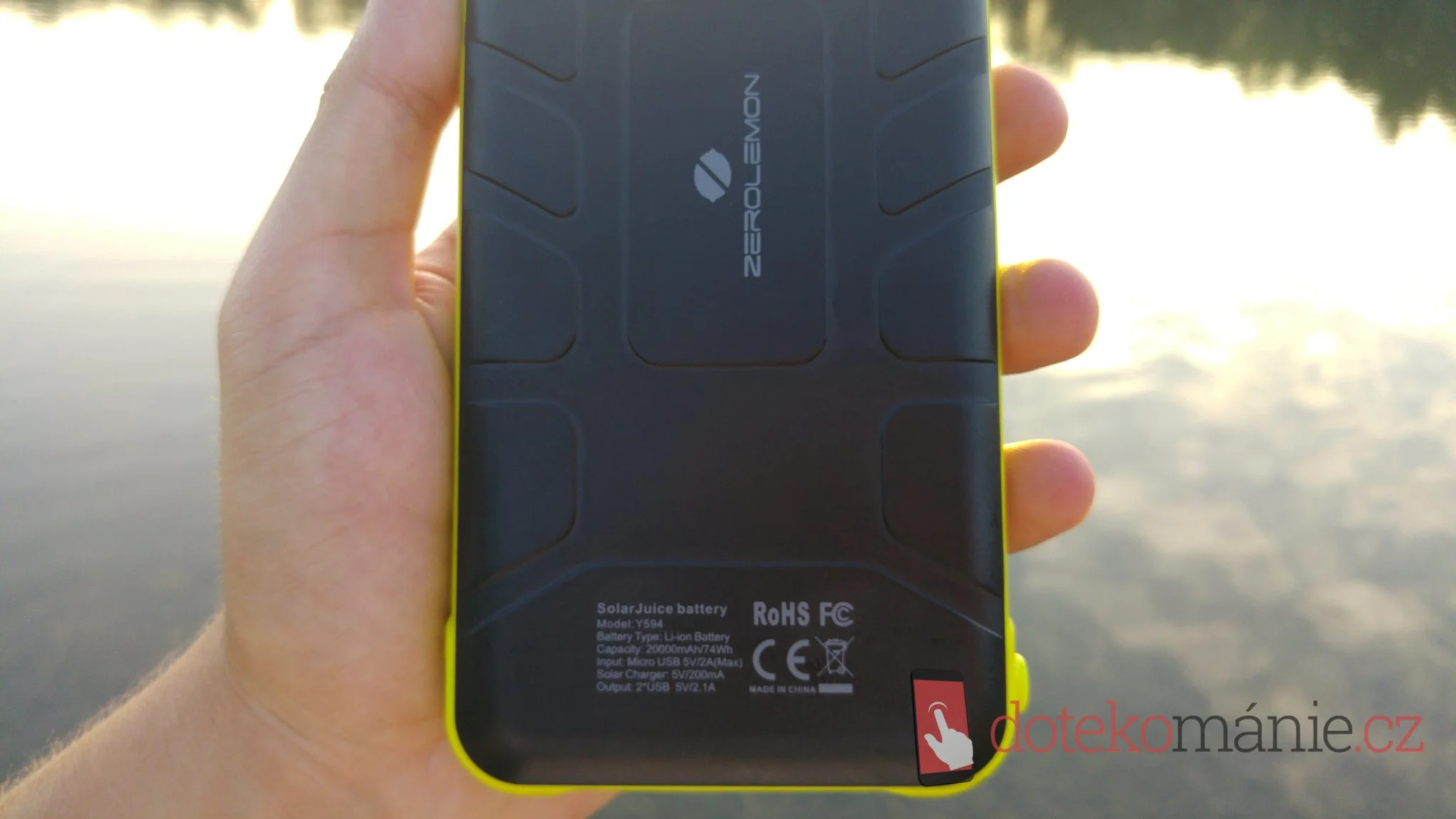
In testing, the fully charged pack was able to recharge a phone drained to 0 percent six full times, with roughly another 35 percent of a phone battery left in reserve. After that, the small blue notification LED began blinking to indicate the power bank needed to be recharged. The status LEDs provide five practical charge-state combinations.
When all four blue LEDs are lit, the power bank is full. As the battery drains, the number of lit LEDs drops. If one LED goes out, you still have roughly 50 to 75 percent remaining. Two lit LEDs indicate 25 to 50 percent, and one lit LED means you’re down to about 5 to 25 percent.

One detail stood out right away: you don’t need to manually power the charger on. Just plug your phone into the USB port and charging starts automatically. A lot of power banks still rely on a separate power button, so this makes the SolarJuice a little easier to live with.
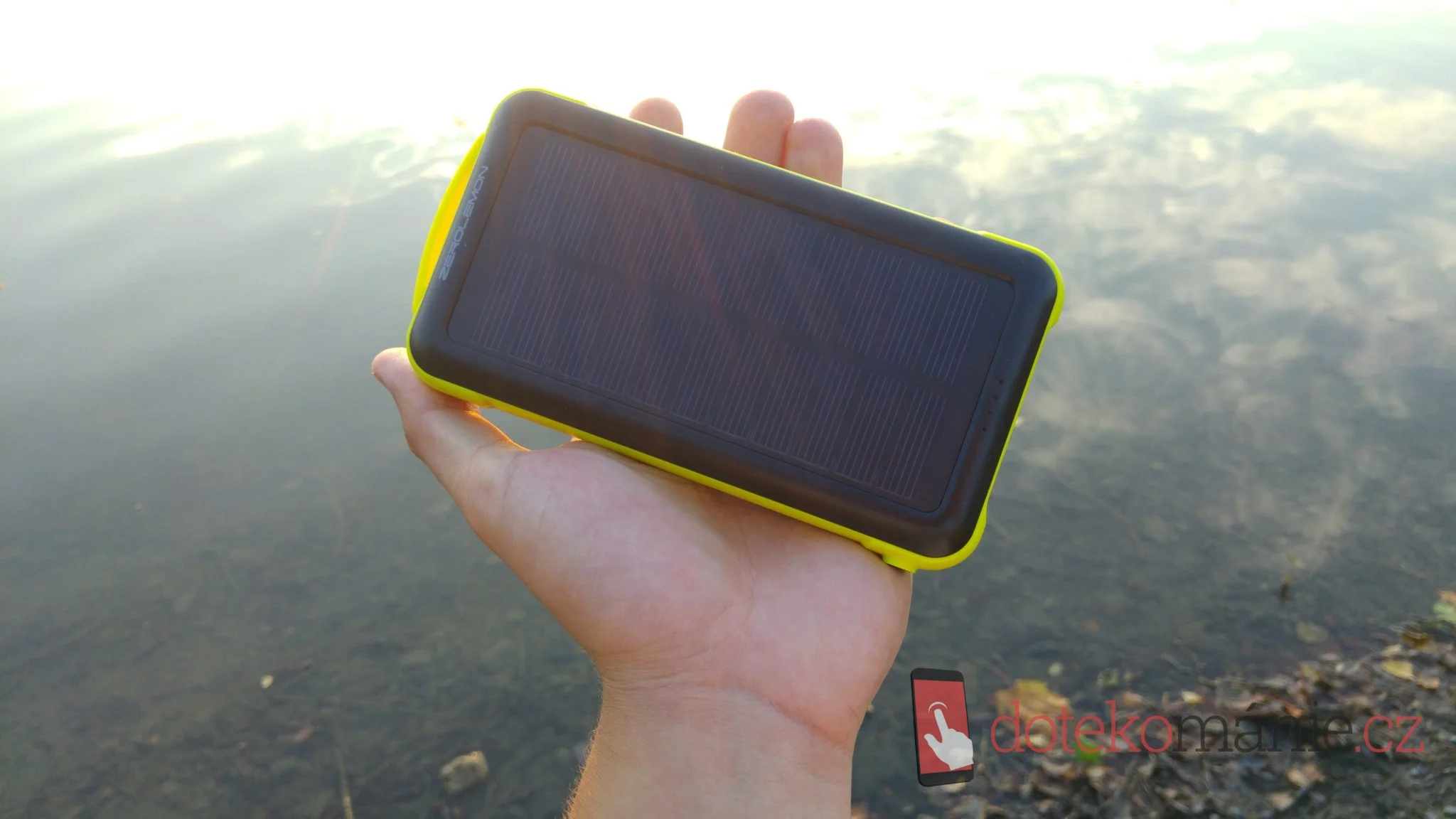
When charging through the solar panel, the device was able to gather enough energy to recharge a 3,000mAh phone battery to roughly 20 percent. That’s useful, but it also puts the solar feature in perspective. This is best treated as an emergency backup for situations where you know you’ll be away from an outlet for several days. During solar charging, the unit warmed up slightly, though that was clearly caused by direct sun exposure.
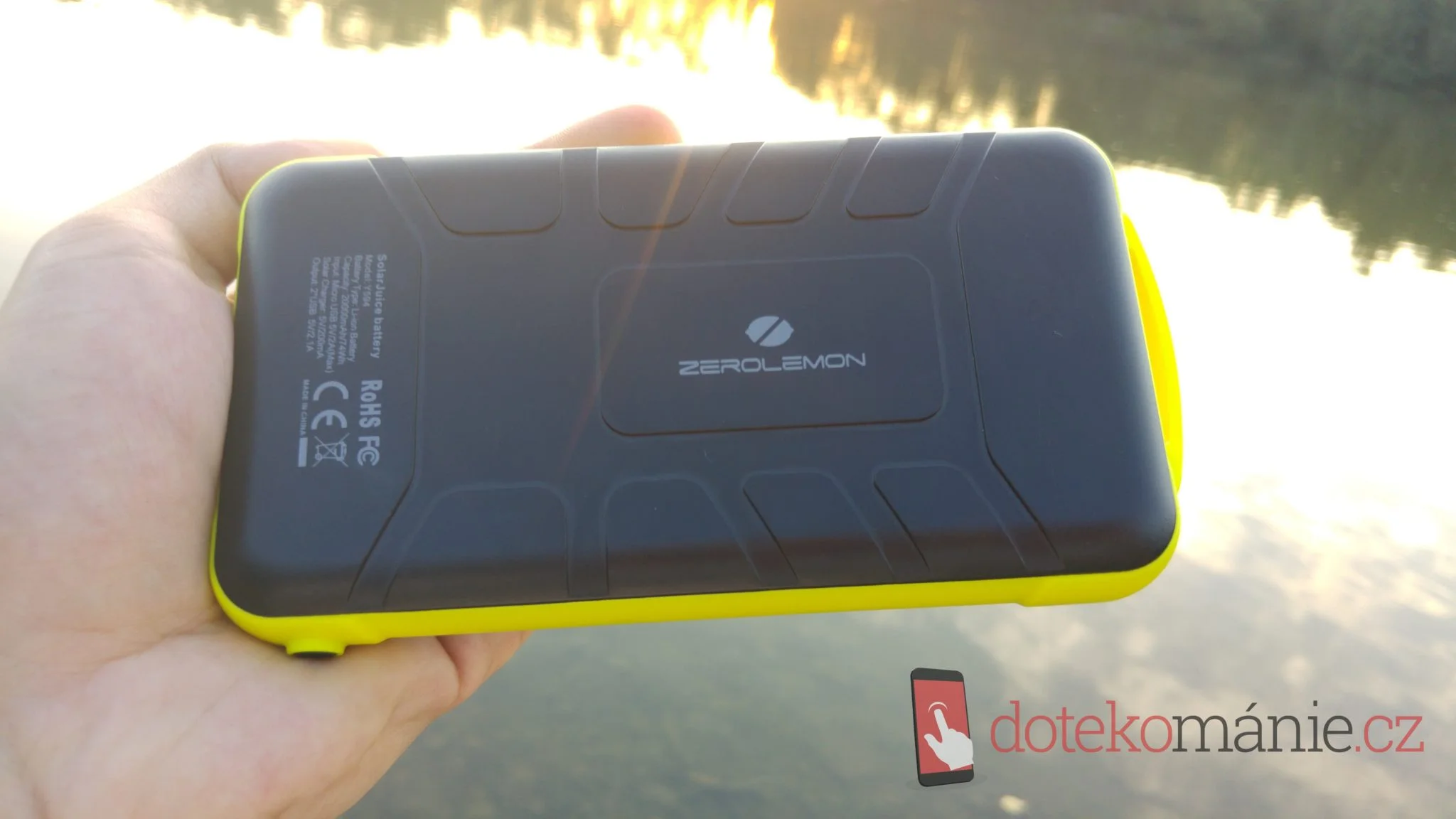
Charging the power bank itself from 0 percent through a wall adapter took about 12 hours, which was a pleasant surprise. With this much capacity, a much longer wait would have been easy to expect. In this case, the pack was charged using the ZeroLemon 18W charger with Quick Charge 2.0 support, and the result left a strong impression.
As a power bank first and a solar charger second, the SolarJuice makes sense. It’s large and heavy, but it delivers the kind of capacity that matters on trips, long commutes, or emergency backup duty. The solar panel won’t replace wall charging, but it can buy you a little extra time when the grid isn’t an option.
Summary
The SolarJuice 20,000 mAh charger is one of the best devices I’ve had the chance to test. Price is, of course, a big part of the equation, and this one stays surprisingly affordable for what it offers at $79. You can buy the power bank through ZeroLemon’s official site or on Amazon.

Community Discussion 0 COMMENTS