
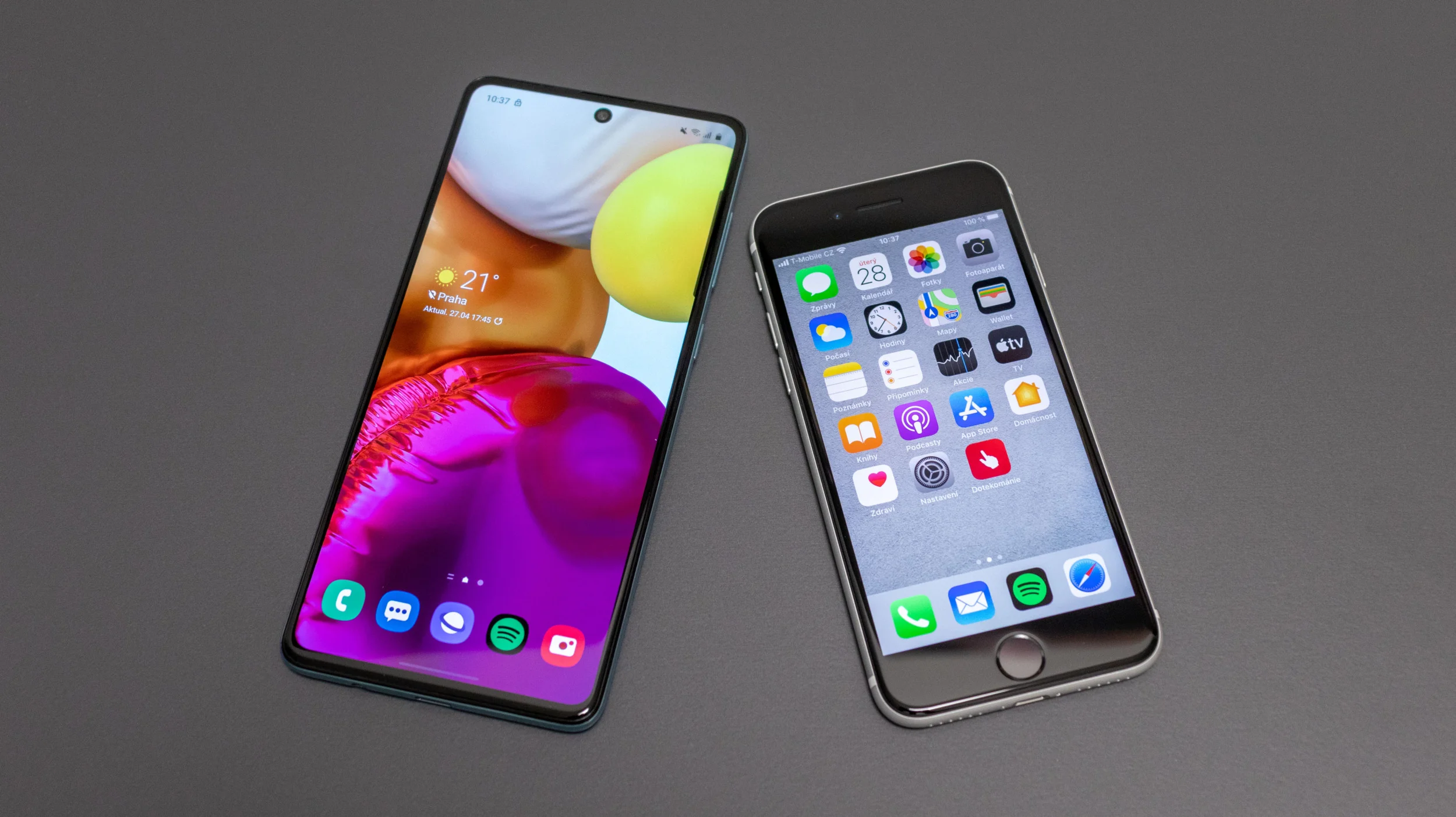
Today we’re taking a look at two midrange phones and putting them head to head: Apple’s new iPhone SE and Samsung’s Galaxy A71. Both are 2020 models, and both typically sell for around 13,000 CZK (approx. $598 / €534) when they’re not discounted. Let’s get into it.
Design: giant vs. compact
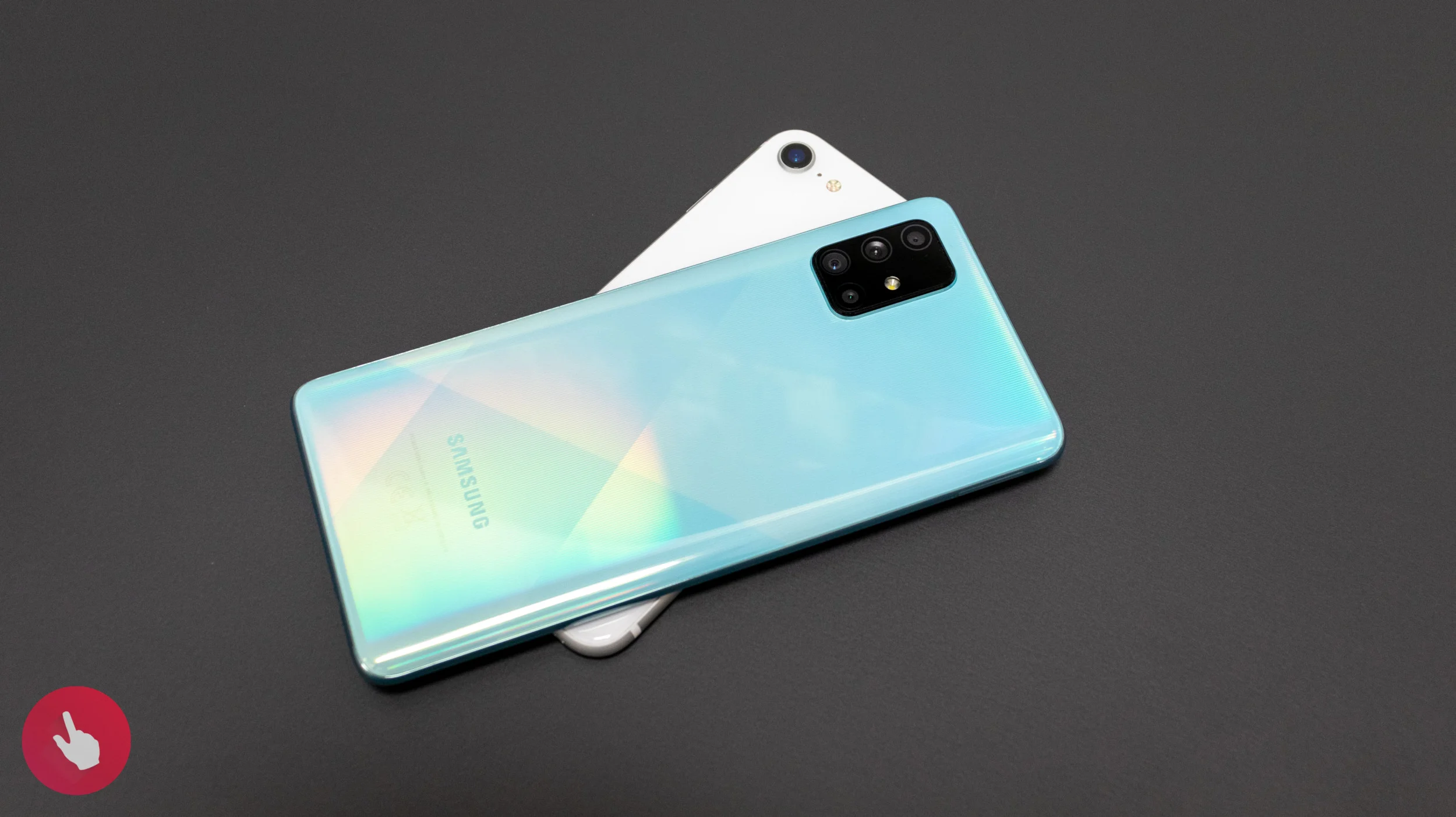
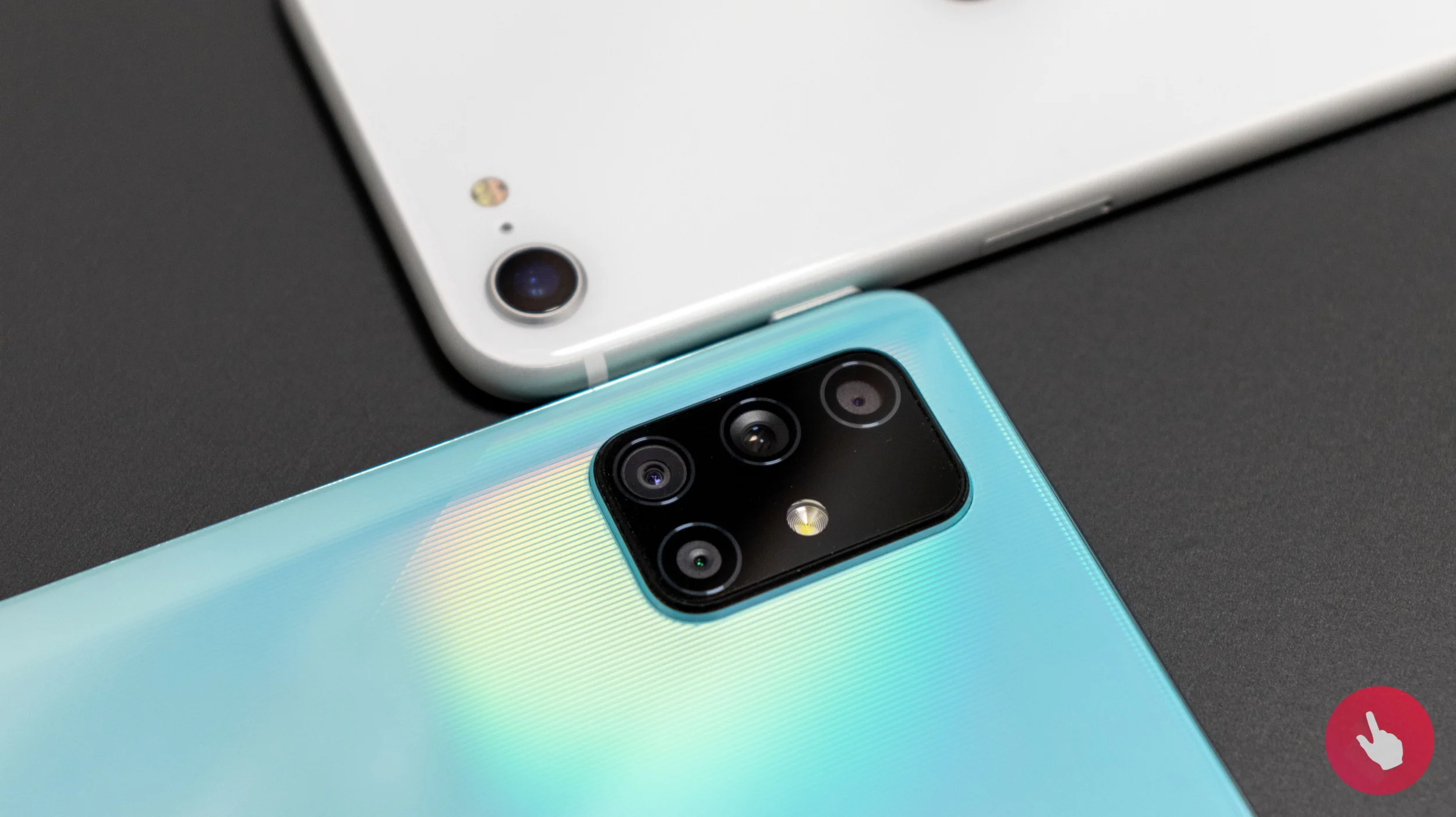
The biggest difference between these phones is size. The iPhone is genuinely small, with a 4.7-inch display, while the Samsung Galaxy A71 has a panel that’s exactly two inches larger at 6.7 inches.
We originally wanted to pair the iPhone with a new compact Android phone from this year at a similar price. That turned out to be nearly impossible — most new Android phones are much larger, with displays over 6 inches.
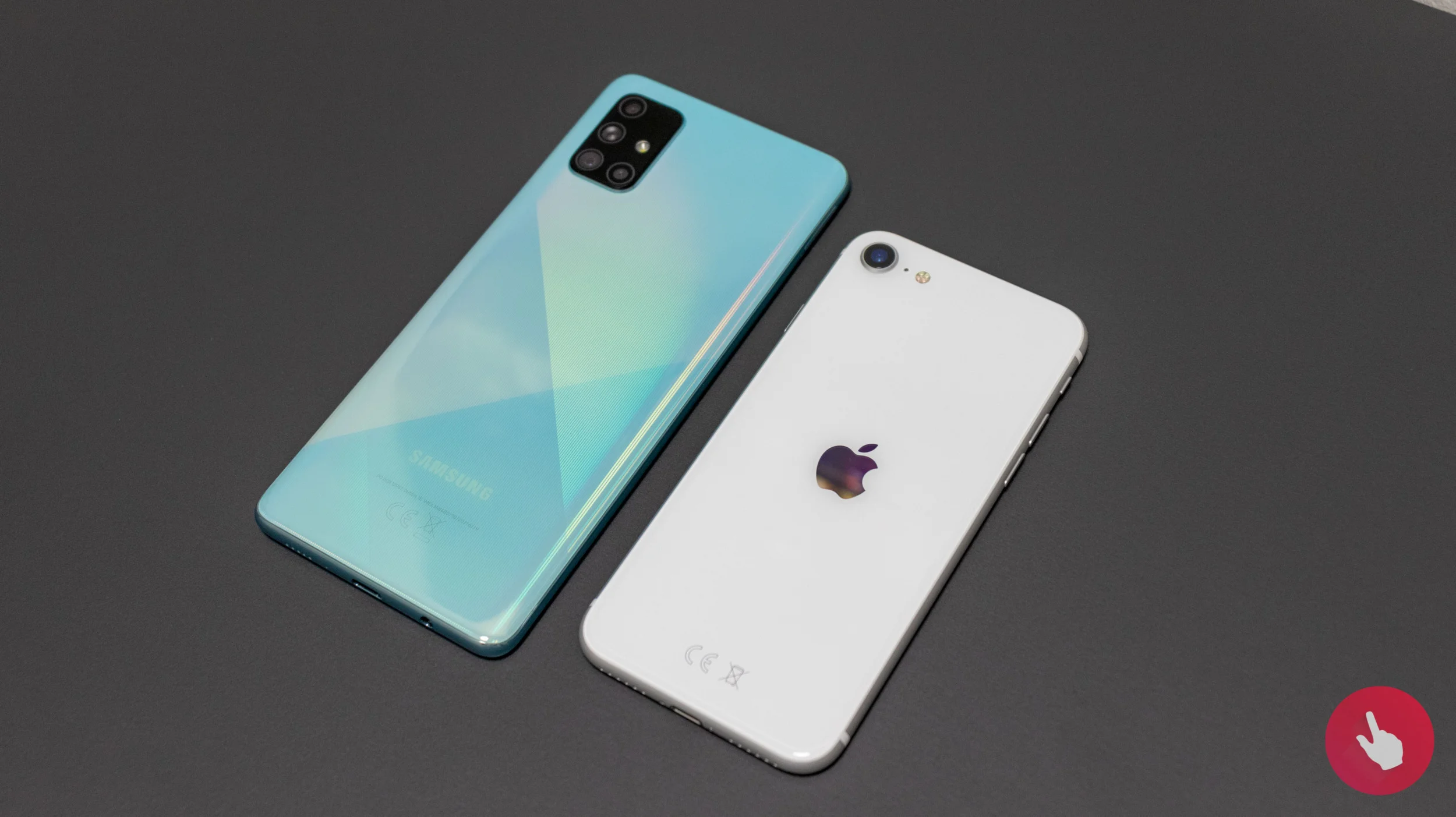
That said, back to this particular pair. If you set aside the size difference, Samsung’s phone offers the more current design. It essentially looks like the Galaxy S20 lineup, with slim bezels and a centered hole-punch camera. The new iPhone SE, by contrast, uses what feels like a retro front design from 2014.
Plastic vs. glass
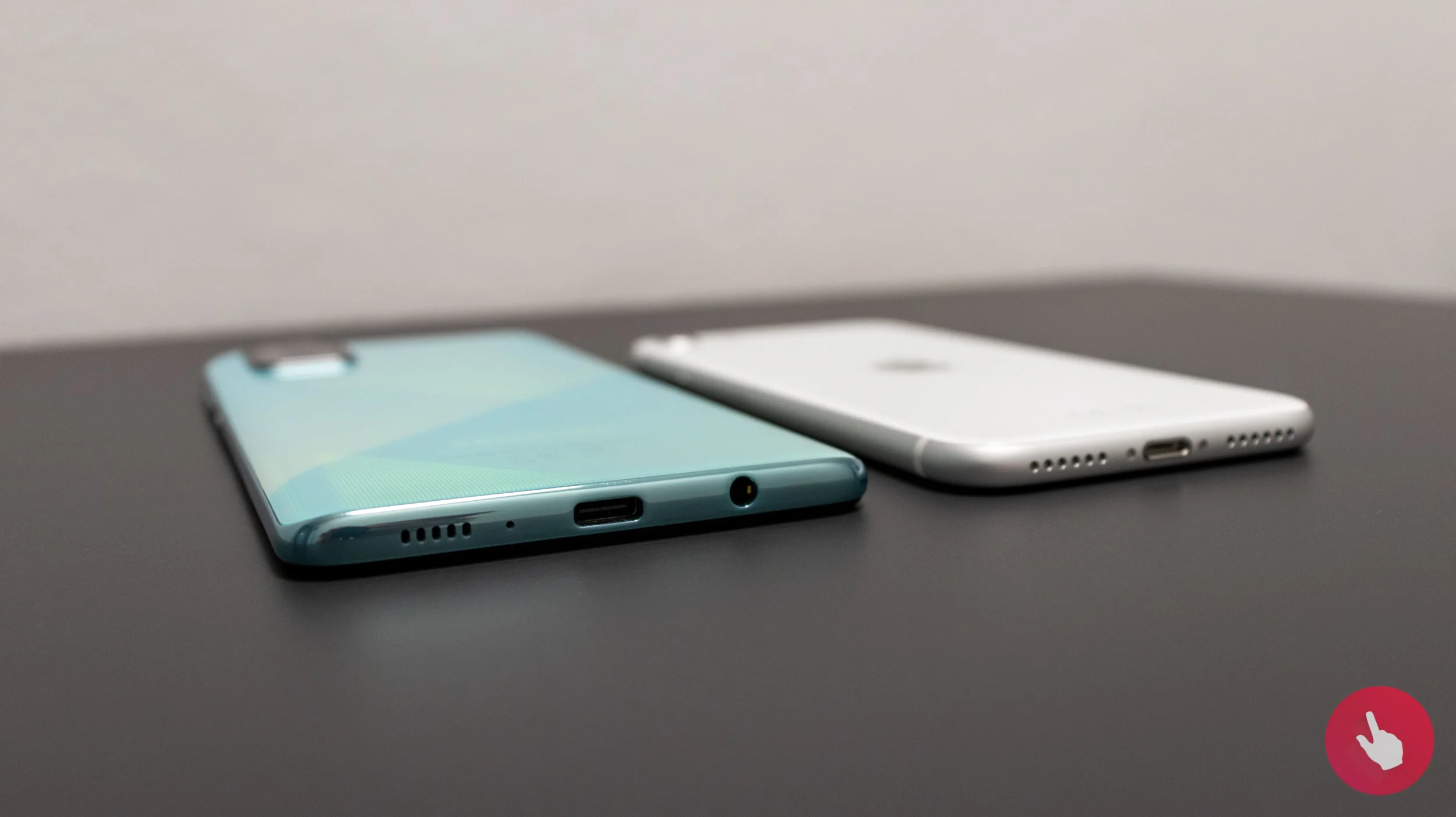
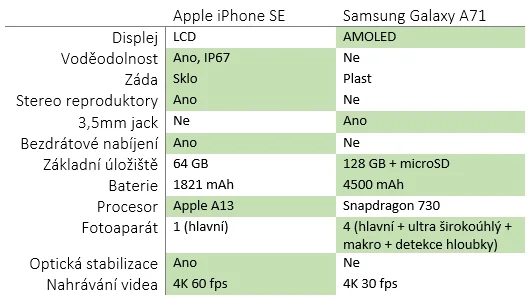
Even so, the iPhone SE has a few extras, including IP67 water resistance and stereo speakers — two features the Galaxy A71 unfortunately lacks. Apple’s phone also feels more premium in hand, with an aluminum frame and glass back. Samsung uses plastic for those parts. Wireless charging is another advantage for the iPhone.
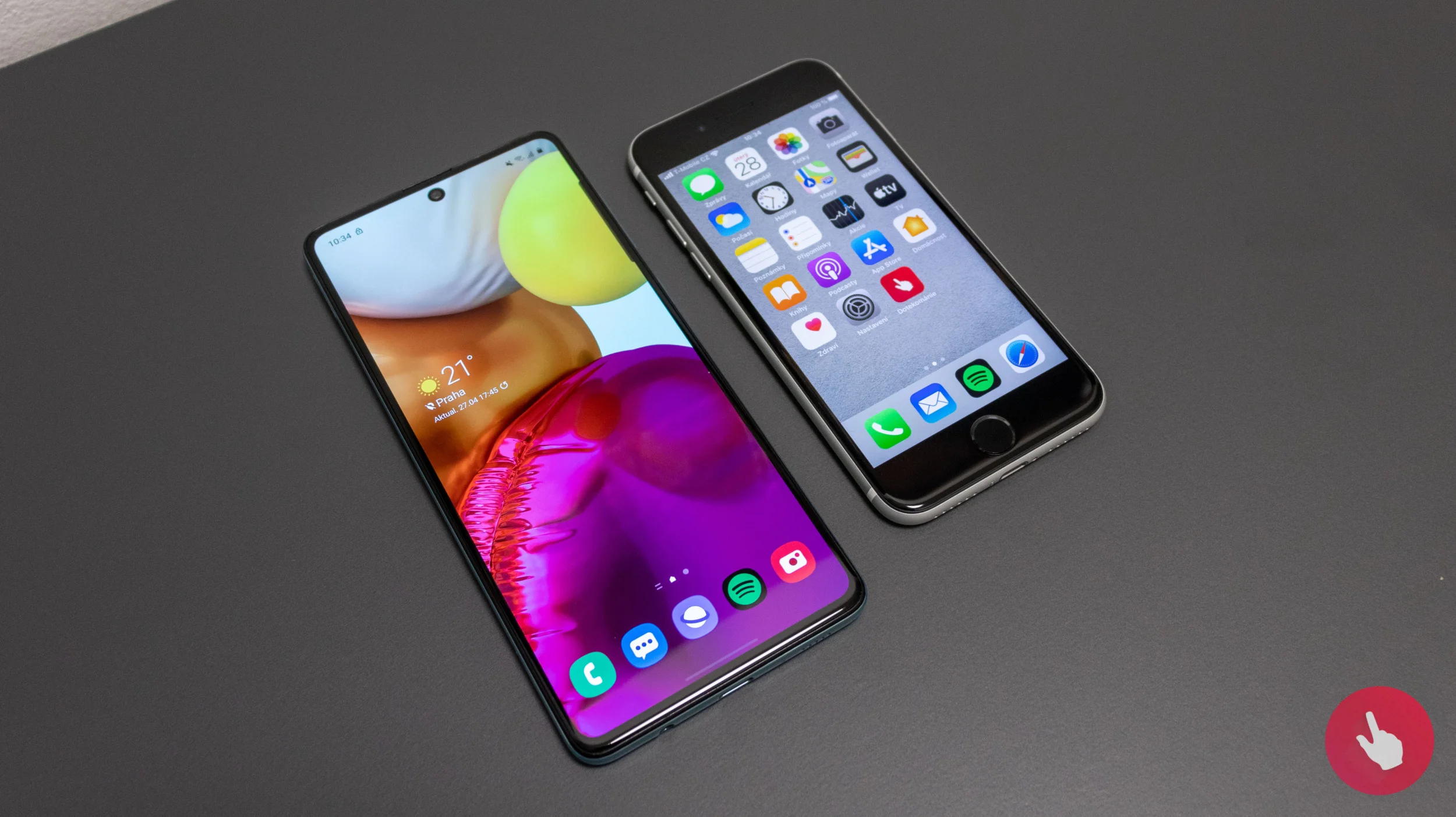
On the other hand, the Samsung Galaxy A71 gives you a 3.5mm headphone jack, a better AMOLED panel, and more storage out of the box, which can also be expanded via microSD. As for the size tradeoff, that comes down to personal preference.
Apple A13 vs. Snapdragon 730
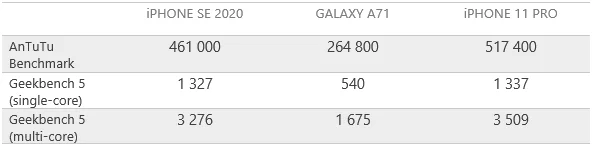
The new iPhone SE has just 3GB of RAM, which is half of what Samsung offers. But given how iOS works, that’s entirely sufficient. The Apple A13 in the iPhone also posts much higher benchmark scores, though in real-world use the Snapdragon 730 is still more than capable for most people.
The Galaxy A71’s fingerprint reader is built into the display and uses an optical sensor. In practice, it isn’t as reliable as the iPhone’s Touch ID sensor in the home button. On the A71 especially, you often have to press fairly firmly on the screen for it to register successfully.
There’s also a fairly noticeable difference in haptics. That won’t matter to everyone, but the iPhone’s vibration motor is much better, more refined, and capable of delivering shorter, sharper feedback.
Software
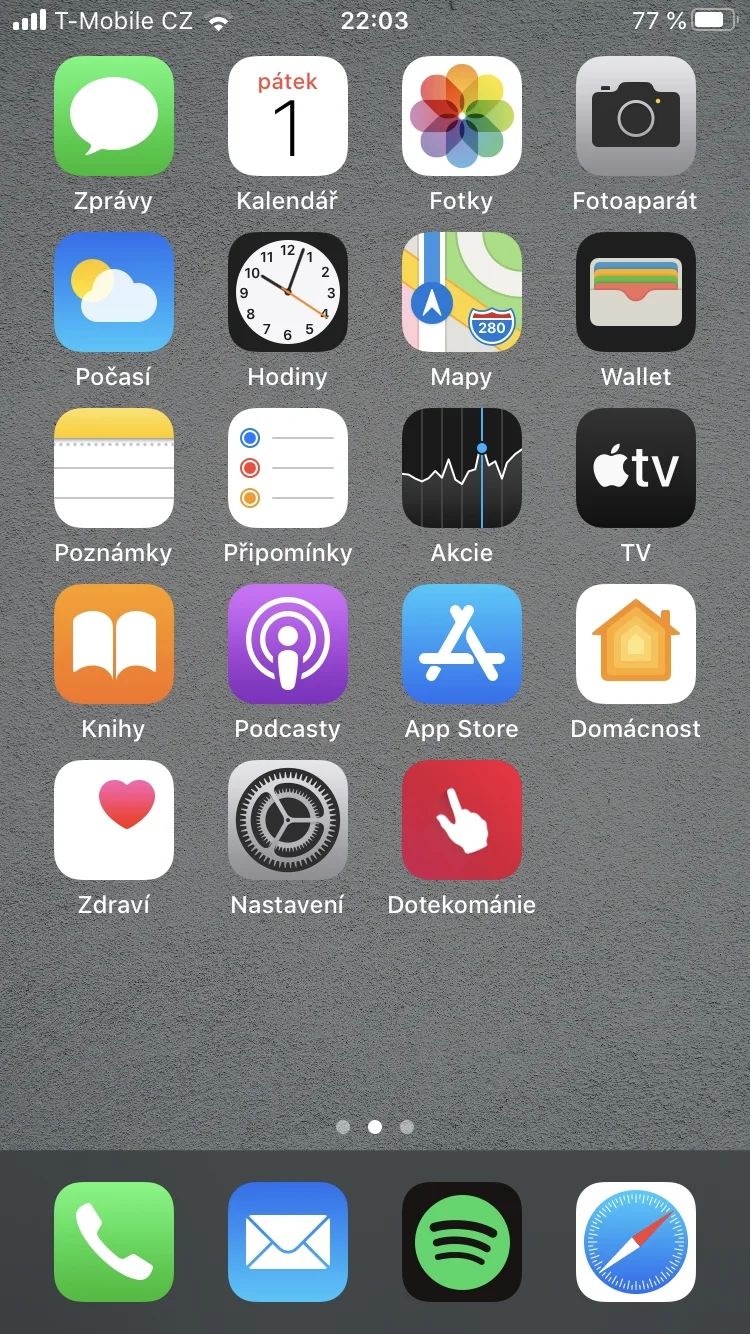
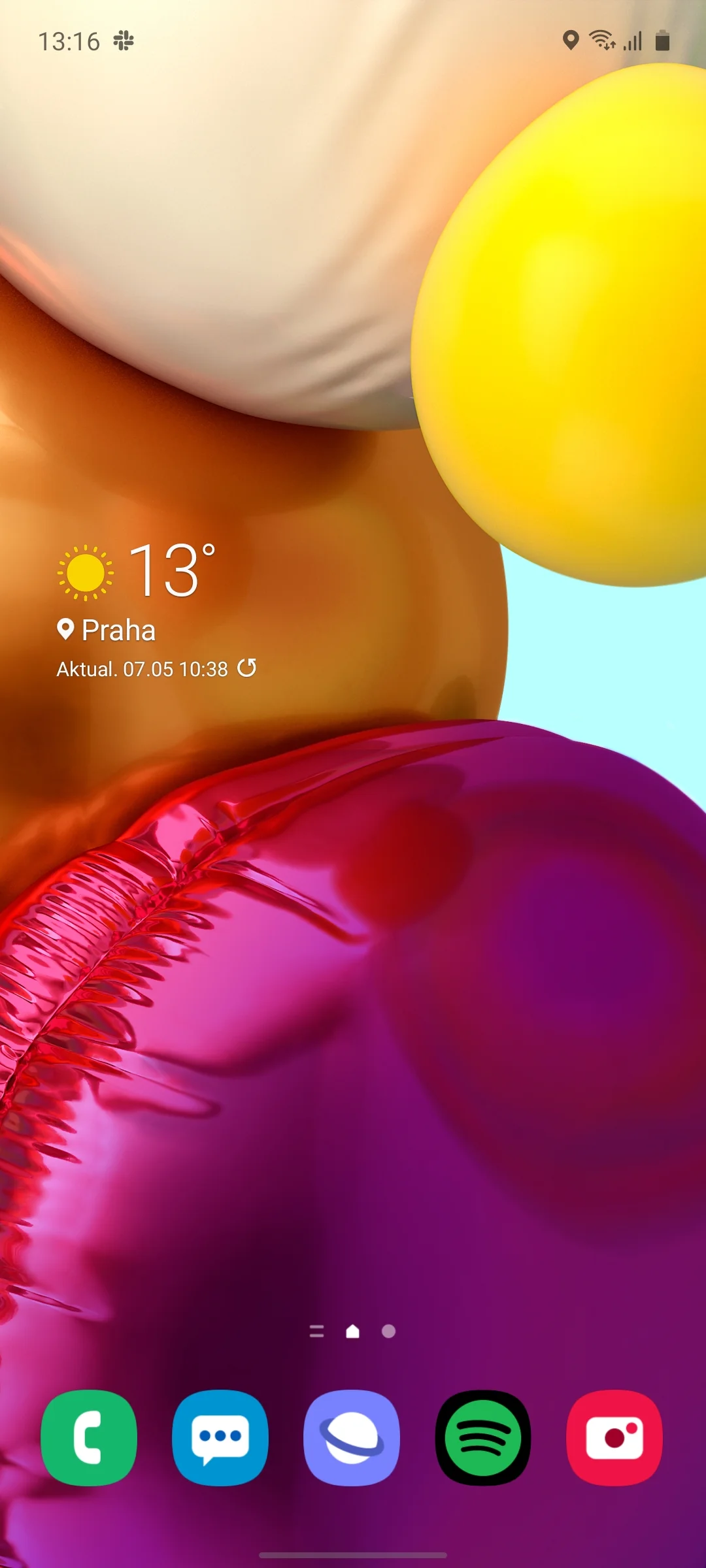
Comparing iOS and Android only goes so far — each platform has its own strengths and weaknesses. Both have mature app ecosystems and stores, and the overall app selection is very similar. In day-to-day use, though, the iPhone felt faster, and more importantly, I never saw a stuttery animation on it. That happens on the Samsung fairly often.
Both phones are running the latest software available to them. On the iPhone SE, that means iOS 13.4.1, while the Galaxy A71 is on Android 10 with the January 1, 2020 security patch. Samsung typically delivers security updates for its midrange phones once per quarter. On the iPhone, updates arrive for all supported models at the same time, and long-term support will likely last more than twice as long.
Below is a quick breakdown of what the iPhone SE offers over the Galaxy A71, and vice versa:
iPhone SE advantages
- Stereo speakers
- IP67 water resistance
- Wireless charging
- Glass back
- More powerful processor
- Camera has OIS
- Likely longer software support
Galaxy A71 advantages
- More modern design
- AMOLED display
- More cameras, including ultrawide
- More base storage, plus expandability
- Much larger battery
- 3.5mm headphone jack (and FM radio)
Camera and video
We compared the cameras in a separate article here
So, which one wins?
It’s pretty clear that these two phones are likely to appeal to very different buyers. The iPhone SE is for fans of small phones who also prefer iOS. The Galaxy A71, meanwhile, offers Android in a large body at an appealing price. Even so, it’s interesting to compare the midrange across two completely different platforms.
The most interesting comparison is the camera, where I was surprised by how well both phones perform. The A71 adds an ultrawide sensor, while the iPhone delivers much better video recording. We go into more detail in this separate article here.
When it comes to longevity, the iPhone SE will probably come out ahead. It should continue receiving software updates for another four to five years — something even many Android flagships can’t match. I also think its body may hold up better over time, since I don’t consider plastic as durable, though plastic does have one advantage: it won’t crack like glass.
Which of these models — or another midrange phone — would you buy?
Ultimately, it really comes down to your priorities. The new iPhone SE offers some premium features, like wireless charging and water resistance, that Samsung reserves for its flagship models. But compared with the iPhone, the Galaxy A71 gives you a more modern design with an AMOLED display, larger expandable storage, and a bigger battery.
Table
Community Discussion 0 COMMENTS